


You might be wondering, “Should I get a divorce?” or thinking, “I want a divorce,” and feeling so torn because part of you still hopes for something better. It’s completely normal to feel confused and overwhelmed when you find yourself stuck between staying in the marriage and leaving. Maybe you’ve been carrying the emotional labour, trying everything you can to make a healthy marriage work, and now you’re exhausted, but not ready to give up.
You’re far from alone. For example, according to the Pew Research Center, in the U.S. in 2023, more than 1.8 million people divorced, and about one-third of adults who have ever been married report their first marriage ended in divorce. And studies show that among surveyed individuals, 75% cited lack of commitment, 59.6% cited infidelity, and 57.7% cited too much conflict as major reasons for divorce.
If you’re wondering whether to stay married or file for divorce, it’s okay to press pause. You don’t have to rush the decision. Slow down, breathe, and permit yourself to move toward clarity rather than panic.
Here’s a preview of what we’ll explore in this article:
- When to divorce: signs and questions to ask
- I want a divorce: digging into what lies beneath the surface
- Is divorce worth it: helping you weigh the decision
- Support options like couples therapy, marriage intensives, and individual therapy
- How to know if you’re really ready for divorce
If you’re thinking about divorce, considering divorce, or just wanting help with an unhappy marriage, you don’t have to go it alone. Let’s find some clarity together.
When You’re Asking, “Should I Get a Divorce?”
That question can feel enormously heavy, and if you’re thinking of leaving, you’re not alone. Many people reach a point in a long-term relationship where they feel stuck between whether to stay or go. Maybe you’ve been feeling lonely in your marriage or walking on eggshells for far too long. Maybe resentment has built up, conversations have gone quiet, or every interaction seems to turn into a fight.
Research from the University of Georgia found that marital conflict significantly increases feelings of loneliness and emotional isolation over time. When day-to-day life feels this painful, the thought of relief can be overwhelming.
You might be asking yourself:
- Do I want a divorce, or do I just want the fighting to stop?
- Am I looking for peace, or am I truly ready for divorce?
- Is this exhaustion talking, or is my heart done trying?
It’s important to understand the difference between:
- Wanting relief (craving space, time apart, fewer arguments)
- Wanting to leave (believing the relationship cannot become a healthy relationship again)
And it’s understandable that clarity feels nearly impossible right now. When emotions are high, the mind races with fear about the consequences of divorce, the divorce process, child support, legal separation, and how life will change post-divorce. You may even be wrestling with messages like “God hates divorce”, guilt about the possibility of divorce, or pressure to stay married no matter what.
Many people in this place feel torn between:
- Choosing to divorce or trying marriage counselling
- Calling a divorce attorney or family law attorney
- Reaching out to a family therapist
- Wondering if it’s time to get a divorce or time to consider divorce more slowly
Seeking professional help isn’t a commitment to divorce proceedings; it’s a compassionate step toward clarity. Thoughtful self-reflection, temporary separation, or support from a licensed expert can help ground your divorce decision in calm rather than panic.
You don’t have to rush. You don’t have to decide today. You’re allowed to breathe first.
Should I get divorced?
There’s no single right answer. If you’re unsure, it’s important to slow down and explore the decision with support rather than rushing. A therapist can help you gain clarity about what you truly want and need.
When to Divorce: Signs That Something Needs to Change
Reaching the point where you’re wondering if it’s time to consider divorce can feel heartbreaking. You might be asking yourself whether the relationship is repairable or whether leaving a marriage is the healthiest path forward. For many couples, this decision comes after years of trying, hoping, and working hard to make things better, especially if you’ve been in the relationship for a long time and feel exhausted, unseen, or deeply unhappy.
The truth is, knowing when to seek help and when it may be time to step away is rarely simple. But there are some important distinctions that can bring clarity.
When to Divorce Versus When to Seek Support First
There are times when staying is unsafe or harmful, and clarity becomes more urgent. Situations that may require immediate action include:
- Abuse of any kind (physical, emotional, verbal, or financial)
- Active addiction with refusal to seek treatment
- Repeated patterns of coercion, threat, or control
There are times when staying is unsafe or harmful, and clarity becomes more urgent. Situations that may require immediate action include abuse of any kind (physical, emotional, verbal, or financial). No one should stay in an abusive marriage. If safety is a concern, your well-being matters first.
At the same time, it may be helpful to name an important distinction: not all relationship violence is the same. Many couples experience what is known as situational couple violence – conflict that turns into emotional and possibly physical violence, but without patterns of domination, control, or fear. In these cases, and only when both partners feel safe, take accountability, and are deeply committed to ending violent cycles, evidence-based approaches like Emotionally Focused Therapy (EFT) can help couples understand the underlying emotional patterns driving conflict and rebuild safety together.
However, EFT is not appropriate for situations involving intimate terrorism, where one partner uses control, intimidation, or fear to dominate the other. Those situations require a very different response and focus on safety first, not repair.
There are also relationships where the connection is buried but not broken, and where repair is still possible, especially when both partners are willing to seek help. Marriage counseling may offer important support before making a final decision.
Research shows that couples who engage in structured support and evidence-based therapy, such as Emotionally Focused Therapy (EFT), can rebuild connection and develop a successful relationship even when things feel bleak.
Many married couples assume divorce is the only option because the pain feels so overwhelming, but sometimes repair is still possible with time, effort, and professional support.
How do I know when to seriously consider divorce?
If you’ve tried to repair the relationship and still feel unsafe, disconnected, or chronically unhappy, it may be time to reflect on whether the relationship can change. Consider divorce only after exploring your options with care.
“I Want a Divorce” — What’s Underneath the Words?
When someone says “I want a divorce”, it’s often not a fully formed decision; it’s a cry from a place of hurt, panic, or emotional overload. The effects of divorce are significant and long-lasting, so it’s worth pausing to understand what’s beneath the words.
Behind that sentence, there is often:
- Longing: a desire to feel loved, valued, and connected again
- Fear: worry that nothing will ever change
- Pain: years of feeling invisible, rejected, or alone
- Exhaustion: the sense that you have nothing left to give
There is a meaningful difference between:
- A reactive statement, spoken during a heated conflict or moment of despair
and - A deeply considered decision to divorce, grounded in clarity and calm reflection
You don’t need to decide right now. Giving yourself space for self-reflection and support can transform the decision-making process from panic to peace.
Before You Decide: Support Options That Can Bring Clarity
When you’re feeling unhappy in your relationship and the thought crosses your mind that you might want to divorce, it can feel like the only option left is to walk away. But before you make a decision with long-lasting consequences, taking time to breathe, slow down, and explore support options can create space for clarity. You may still be married, but feeling like strangers. You may love each other deeply yet feel trapped in patterns you can’t break. You may be afraid of the risk of divorce or fearful of staying the same. The truth is, you don’t have to choose today. There are paths that can help you rediscover connection or decide your next step with peace rather than panic.
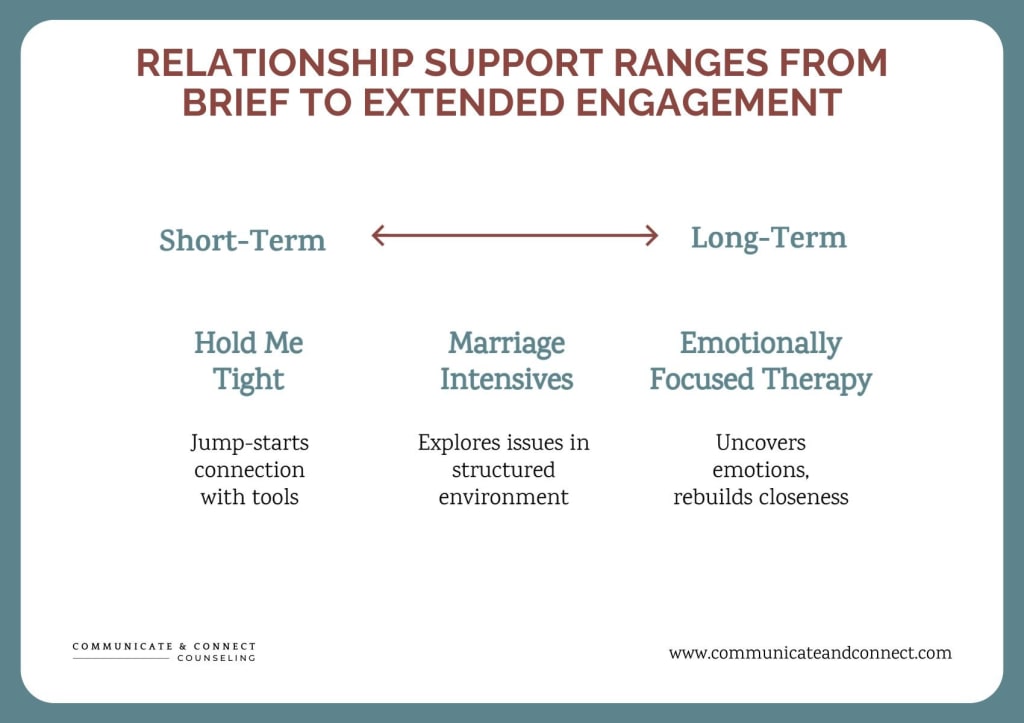
Here are three kinds of support that can shift a relationship that feels stuck, broken, or too painful to continue.
Emotionally Focused Therapy (EFT) — Rebuilding Emotional Connection
Emotionally Focused Therapy is an evidence-based form of couples therapy that helps partners understand the negative cycles they’re stuck in and replace conflict with closeness and safety. Instead of arguing about dishes or finances, EFT helps partners uncover the deeper emotions—fear, hurt, longing—that drive disconnection.
Research shows powerful results: a meta-analysis found EFT significantly improved marital satisfaction and maintained benefits over time. For many couples ready to give up, this is where they rediscover one another. A marriage therapist trained in EFT can help couples move from defensiveness to understanding and repair.
Hold Me Tight Relationship Program
The Hold Me Tight program, developed from EFT research, is an experiential relationship-building process designed to strengthen emotional bonds and foster secure attachment. It gives couples real tools and language to rebuild trust, affection, and safety.
Research shows that Hold Me Tight can meaningfully improve relationship satisfaction and emotional connection in the short term, giving couples a powerful jump-start in rebuilding closeness. However, these gains tend to be most effective when followed by ongoing support. Studies on EFT show that couples who complete a full course of EFT often continue to experience improvement even two years after treatment, suggesting that longer-term therapy can help create lasting change.
For couples who feel distant but don’t actually want to divorce, or aren’t ready to become divorced people with separate lives, this program offers genuine hope and practical steps back to connection.
Marriage Intensives for Deep, Focused Support
Marriage intensives offer concentrated support, typically over one or more full days, ideal for couples who feel truly stuck or are seriously considering divorce. Intensives offer a structured, private environment to explore real issues without distraction.
For couples who worry they might leave the relationship or remarry someone else simply because they don’t know how to repair what’s broken, intensives can be transformative.
Choosing support from a marriage counselor doesn’t mean pretending everything is fine. It simply means giving yourself and your relationship every possible chance to grow, heal, and find clarity, whether that leads to reconnection or a thoughtful and compassionate decision to part.
Is a temporary separation a good idea?
A temporary separation can create space to breathe and reflect rather than react. When done with structure, clear agreements, and professional support, it can help couples gain clarity about what they want going forward.
How to Know If You’re Ready to Decide
If you’re feeling the weight of the question “Should I stay or should I go?”, it’s okay to lean into patience instead of pressure. Making a thoughtful decision about your marriage means pacing yourself, not rushing through because you’re emotionally exhausted. Below are some guides to help you find your way.
Give Yourself Permission to Not Have the Answer Today
When you’re still married but deeply unhappy or thinking about becoming an ex-wife or separate from a former partner, it can feel like every minute counts. But decision-making under time pressure may increase the risk of regret. For example, couples who slide through transitions without conscious reflection show higher levels of relationship distress.
Instead of cultivating urgency, consider pacing yourself:
- Acknowledge the weight of the decision without forcing it.
- Choose clarity over crisis.
- Permit yourself to sit in uncertainty while seeking insight.
Try Asking These Reflective Questions
Here are some simple questions to help you explore:
- Do I believe we’ve tried everything we can?
- What do I need to feel more connected, seen, and supported?
- What would I regret more: staying and trying or leaving without digging deeper?
- If things could change, what would I hope would be different?
- What part of me still hopes this can work?
These aren’t “yes/no” questions; they’re invitations to honest self-reflection rather than quick decisions.

Take a Breath. We’ll Help You Find Your Way Forward
At Communicate & Connect Counseling, we specialize in Emotionally Focused Therapy, Hold Me Tight workshops, and Marriage Intensives designed for couples who feel disconnected, overwhelmed, or on the brink of separation.
We help couples rebuild communication, emotional safety, and connection so that they can make a thoughtful and grounded decision about their relationship.
Whether you want to repair what’s broken or understand whether it’s time to lovingly let go, we’ll guide you with compassion, structure, and clarity.
You don’t have to choose alone. Reach out today to schedule a consultation and take the first step toward clarity, connection, and hope.


