

Episode Outline: Navigating Erectile Dysfunction Together: Insights from Physical Therapist Eve Hall
Episode Summary of “Navigating Erectile Dysfunction Together: Insights from Physical Therapist Eve Hall”
Has physical intimacy in your relationship started to feel like a source of anxiety rather than connection? You are not alone. In this episode of the Communicate and Connect Podcast, I’m joined by physical therapist Eve Hall to discuss a topic that many couples struggle with in silence: Erectile Dysfunction (ED).
We often see a pattern where a physical struggle leads to emotional withdrawal. One partner feels shame, the other feels rejected, and suddenly, a “blockage” in the body becomes a blockage in the relationship cycle. Today, we’re slowing down and getting curious about the physical, emotional, and relational sides of sexual health.
What You’ll Learn in This Episode:
– Why Men Hide Erectile Dysfunction
– Introducing Eve Hall: Physical Therapy for Sexual Health
– How Common is ED? (The Surprising Statistics)
– Physical vs. Psychological Causes of Erectile Dysfunction
– The Connection Between Sexual Health and Heart Disease
– Acoustic Wave Therapy and Dry Needling for ED
– How to Tell if ED is Caused by Anxiety or Relationship Conflict
– How to Talk to Your Partner About Erectile Dysfunction
– Why Penetration Isn’t the Only Way to Have Great Sex
– Can Erectile Dysfunction Be Reversed? (Nutrition & Health Tips)
Don’t forget to check out our free 10-week relationship email course. This email course is really designed for people who are maybe having trouble with communication or connection in their relationship and helping them develop some quick wins right away to start improving it.
Guest Speaker Bio – “Eve Hall”
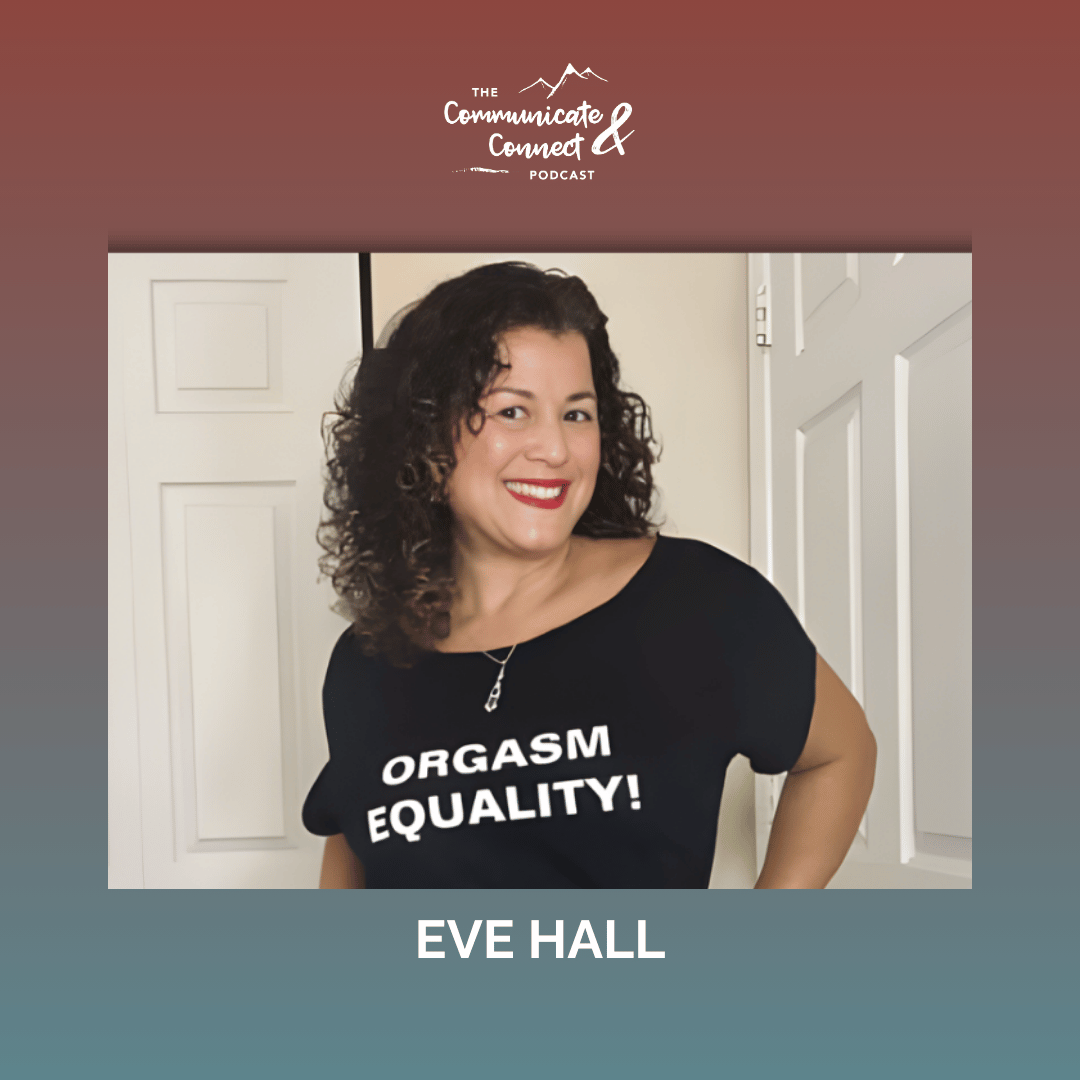
Eve is a Licensed Physical Therapist who treats conditions regarding Sexual Health. She is also a Certified Health Coach who is on a mission to destigmatize conversations about sex and sexual health! Eve is the Host of a podcast called Please Me! where she covers all sorts of topics related to sexuality such as Safe Sex, Kink and Fetish, Orgasms, Big Clit Energy, Relationship Options and so much more! She is the creator of the growing Orgasm Revolution where she aims to bring awareness to the orgasm gap, and close women’s orgasm gap one person at a time with education, awareness and communication.
Connect with Eve Hall: Website – Facebook – Instagram – YouTube – LinkedIn – Tiktok
Free Relationship Pattern Assessment
Many couples assume they have a communication problem when they’re actually stuck in a relationship pattern that keeps creating the same conflict.
Take the free Relationship Pattern Assessment to discover what pattern may be keeping you stuck and learn what to focus on next.
Episode Transcript for “Navigating Erectile Dysfunction Together: Insights from Physical Therapist Eve Hall”
This podcast is sponsored by Communicate and Connect Counseling, where we have a team of therapists who provide individual couples and family therapy services, all tailored to meet the needs of military and veteran families. To learn more about our services, visit www.communicateandconnect.com.
Welcome to the Communicate and Connect podcast for military relationships with your host, Elizabeth Polinsky, a military marriage counselor. If this is your first time listening to the Communicate and Connect podcast, please take a second to go rate review and subscribe to make sure you get all our future episodes.
We also really want to know what it is you love about our podcast, and if for some reason you’re not loving it, we want to know that too because we’re committed to providing the best quality content to help you improve your relationships.
You’re listening to episode 70, Navigating Erectile Dysfunction Together: Insights from Physical Therapist Eve Hall.
Introduction: Navigating Erectile Dysfunction Together
Dr. Elizabeth Polinsky: Hey everyone. Welcome back to the Communicate and Connect podcast. This is episode 70, Navigating Erectile Dysfunction Together: Insights from Physical Therapist Eve Hall.
So Eve, thank you so much for being on the podcast. I know we got to meet. I don’t know if, maybe a few months ago, several months ago, maybe now, when I got to be on your podcast and I’m so excited to have you on mine.
Maybe we can just start with you sharing a little bit about yourself and what you do as a physical therapist.
Introducing Eve Hall: Physical Therapy for Sexual Health
Eve Hall: Absolutely. So, I have a practice called Inspire Health Physical Therapy and Wellness, and my focus is sexual health conditions. I treat all sorts of sexual health conditions for women and men.
Today we’re gonna be talking about erectile dysfunction. I also treat premature ejaculation, fractured penis, penile atrophy.
There’s a lot of different things that I treat in my practice.
I also can help men with improving their girth and length if that’s something that they’re interested in. And for women, I treat things like incontinence, painful sex, vaginal dryness and decreased sensitivity, et cetera.
So all sexual health conditions, but all within the realm of the pelvic floor, which is really the sexual area of our body, the pelvic floor. And a lot of times people don’t understand what the pelvic floor actually is, so I always think that sexual health describes it better.
Dr. Elizabeth Polinsky: Yeah. And as you were saying, everything that you do, I was thinking, wow, there really are so many aspects to sexual health and so many things that people can be facing, in terms of their sex life. And we haven’t even touched the psychological side of sex.
So I’m thinking maybe we’ll have you back one day to talk about some of these other areas. But for today, can you help us know a little bit how frequent is erectile dysfunction?
And maybe just like an overview of what that is, what causes it.
How Common is Erectile Dysfunction? (The Surprising Statistics)
Eve Hall: So erectile dysfunction is actually quite common. 20% of men in their twenties start having issues with erectile dysfunction, and it goes up 10% per decade, 30% of men in their thirties, 40% of men in their forties and by 50 half of men will have erectile dysfunction in some way, shape or form.
Physical vs. Psychological Causes of Erectile Dysfunction
And erectile dysfunction is caused by a lack of blood flow. There’s also other related issues like the psychological and emotional issues that can go also into erectile dysfunction, but the physical causes 50% of men in their fifties will have physical issues or blood flow issues that will cause some form of erectile dysfunction, whether it be mild to severe.
Dr. Elizabeth Polinsky: Wow. I had no idea that it was that prevalent.
Of course, I’ve had plenty of couples who come in for couples counseling who are talking about concerns with sex and erectile dysfunction is a common one that comes up, but that just feels really normalizing to me to hear you say the frequency of it, like it’s really not abnormal thing at all.
It’s actually quite common.
Eve Hall: It’s super common and unfortunately what’s abnormal is us talking about it, right? And so that’s why normalizing the conversations about this is so important. Because if you’re not talking about it, you’re not gonna be able to fix the issue. And there are treatments that you can get to help with the physical manifestations.
Of course, you can get therapy to work on the psychological and emotional aspects of it, but for the physical manifestations of it, there are treatments that you can get that can really benefit and help to increase blood flow and help a man to be able to get hard again. If they stop getting those normal morning wood, is something that you’d look for.
In other words, erections throughout the day, another thing that you would look for, that is normal function, right? Men in their teenage years, they’re constantly getting erections all the time. That’s normal function and slowly that declines over time. And when it starts declining and you no longer have say morning wood or nocturnal erections, which is a predictor of heart disease, then that can be a real issue.
Dr. Elizabeth Polinsky: I just noticed like a little fear moment in me. Obviously I don’t have erections, but I was just thinking that this would be something that is important to look at. Like not just for sexual health, but for heart health then. Like noticing if there are changes in sexual functioning could be also indicators of other health complications going on.
The Connection Between Sexual Health and Heart Disease
Eve Hall: Absolutely. It really is. And if you look at nocturnal erections, men should have many nocturnal erections throughout the night while they’re sleeping. If they’re having one or less, this is a direct predictor of a heart attack or stroke within the next six months to a year.
So it is extremely important for men to pay attention to this indicator of health because it is directly correlated with heart disease. And when you think of heart disease, there’s blockages in the arteries and blood vessels. So the same thing happens in and around the penis. And so that is why you’re having a decrease in blood flow.
Dr. Elizabeth Polinsky: Wow, and so you were mentioning earlier that there are different sorts of treatment approaches, of course like for the physical side of things, the blood flow side of things. What sort of treatments are there, or techniques or like, what do people actually do to try to work on that?
Acoustic Wave Therapy and Dry Needling for Erectile Dysfunction
Eve Hall: So I have two treatments that I offer in my practice. And I have a full protocol that goes with that. So the treatment is called acoustic wave therapy. And acoustic wave therapy is basically sound therapy. It’s sort of like an ultrasound wand if you think about that, but it’s specifically designed for the penile tissue.
And what it does is it breaks up the blockages that are in the blood vessels, in and around the penis, the perineum, I work on the whole area. So when you break up those blockages, those blockages can sort of flow away in the bloodstream and kind of get processed out of the body.
And over the course of multiple sessions, the body can produce more capillaries, which are the teeny tiny blood vessels that go to every single cell in your body. So if you’re creating more capillaries, you’re creating more potential blood flow down the line. So depending on the severity of the case, I will recommend a certain amount of treatments in order to break up those blockages and increase the blood flow.
Dr. Elizabeth Polinsky: Okay. So there’s something that, again, I do not know much about the physical side of things, or like even what happens in veins, I’m just trying to make sure that I’m tracking it in my own mind. So it’s like my blood flows through veins, right? And in my vein there’s some sort of blockage there.
And this wand helps erode the blockage so that way the blood can flow more freely.
Eve Hall: Exactly. If you’ve heard of something called atherosclerosis, that is what happens to the blood vessels when they get plaque inside of them. And so we wanna reduce that plaque or eliminate that plaque.
And it’s very important because when you think about someone that has say a quadruple bypass, what they’re doing is they’re opening up their heart and replacing all of those arteries that are completely blocked and not working anymore.
So we want to make sure that the inside of our veins and our arteries, which is called the endothelium, it’s the inside lining of the blood vessels stays healthy and doesn’t get any blockages because the blockages are what cause disease.
And then also, I didn’t mention, the other treatment that I do in my practice is called dry needling. And if you’re familiar with acupuncture, acupuncture is a great adjunct to erectile dysfunction and dry needling is the western version of acupuncture. And many physical therapists also do that. So I can do that in conjunction with the acoustic wave therapy or separate from it.
Dr. Elizabeth Polinsky: That’s really cool. I mean, I am not super familiar with acupuncture, but in my mind I’ve always associated it with like stress reduction and I don’t even know if that’s accurate.
Eve Hall: It can be used to treat many different diseases and emotional issues like stress. Basically, when your body has energy blockages. The needles help to sort of open up those blockages and allow the energy to flow. And so that is the concept behind dry needling and acupuncture.
Dr. Elizabeth Polinsky: This is making sense because the needles might help remove the blockages sort of.
Eve Hall: Yes. They sort of wake up the patterns or the lines of energy flow in the body. They sort of wake them up and allow them to start flowing again.
Dr. Elizabeth Polinsky: This is so cool. I’m finding this like really fascinating actually. And I was thinking about how this might help me with couples who are coming in because I think, sometimes it’s been hard to know how much of this is a physical thing versus how much of this is anxiety.
How to Tell if Erectile Dysfunction is Caused by Anxiety or Relationship Conflict
Dr. Elizabeth Polinsky: They don’t maybe even want to really have sex. They’re not turned on because they’ve had so much conflict or there’s been anxiety going. And I’m curious, how do you differentiate when something can be treated, just with physical therapy versus when they might need to consider individual therapy?
Like how do you know if it’s a psychological or a physical, aspect to this?
Eve Hall: So that’s a great question and there’s definitely things that you would look at. You would look at whether the person is experiencing physical manifestations of normal function, like morning wood. Are they having erections throughout the day? Are they able to masturbate and go to completion? How long are they lasting?
Is it two minutes or less? That would indicate premature ejaculation.
So you would ask specific questions about their physical function. Of course, when you have physical function issues, then that can cause anxiety around performance, et cetera. So you can ask specific questions about that as well. And then you can sort of tease out sometimes one leads to the other, right?
Or sometimes it’s just psychological, but they’re able to masturbate normally and maintain an erection for a long period of time while they’re masturbating, et cetera. If they’re doing something called edging, which is something that I recommend that my clients do to practice being able to maintain the erection for longer periods of time.
One, so that they can enjoy themselves more. And two, so that they can pleasure their partners more.
Dr. Elizabeth Polinsky: Okay. So things like having erections in the morning, if that is happening still, then that’s pretty normal biological functioning. But then if I’m having that, but I can’t keep an erection then with my partner or then that might be an indicator that it’s more about the relationship conflict or internal anxiety around sex or something like that.
Eve Hall: Exactly.
Dr. Elizabeth Polinsky: Okay. Yeah. I know you mentioned the normal rates for erectile dysfunction as men age, 30% in their thirties, 40% in their forties. And I was just curious like what would someone look for to know if it was really a physical problem? I know less than one nighttime erection, if they have erections in the morning every other day. Is that normal or how do you know if it’s abnormal?
Eve Hall: There are some diagnostic tools that I recommend. One is called firm tech and it’s actually, a penis cock ring. And it has a digital aspect to it where you can wear it overnight and it can measure how many erections you’re getting throughout the night. So if you’re getting three or more, you’re good to go.
If you’re getting, less than that, then you’re having issues. And if you’re getting one or less than you are predisposed to heart disease, or you’re going to have a heart attack within the next six months to a year. So that is a physical way to figure out, and firm tech. I can share with you, some information about that.
So you can include it in the show notes is an amazing company that just recently came out. that is really, working on helping men in this arena, but then also without that, just asking your clients, are they having erections in the morning? Morning wood is one of those things that is an indicator.
If you were always having it in your twenties and then you started like having them less in your thirties, and then suddenly there’s no more that is a problem. So we want you to always have an erection in the morning. That’s normal function.
Dr. Elizabeth Polinsky: Thank you for clarifying that. ’cause I was thinking, that might help people who are listening to this, know where to even start with maybe getting help some of it.
Eve Hall: Absolutely. Yes.
Dr. Elizabeth Polinsky: We were saying that there can be a biological thing going on and that could cause anxiety.
There could also be relational anxiety, and I could see how can weave and impact each other. And I was curious about if you have any tips that you give your clients on how to talk about erectile dysfunction with their partners. especially to help make it like a normal, easy conversation, when it might be, uncomfortable to be talking about.
How to Talk to Your Partner About Erectile Dysfunction
Eve Hall: Absolutely. And you know, one of the reasons that I started my podcast was because I would have many clients come to me and say, I’m here because I have erectile dysfunction, but my wife doesn’t know I’m here. And I always thought it was interesting that they were so ashamed of the fact that their function wasn’t working right, that they would not share that with their partner.
And so I like to say that there’s no shame in having a sexual health condition. It’s just like any other medical condition that you can have. And there is treatment for it, which is a wonderful thing. The outside of just giving you pills because the pills do help for a time.
They will get you hard. But over the course of time, if you are developing more blockages, they will stop working eventually. And at that point you’re in the severe range, right? So it’s really best to treat when, someone is either in prevention stage right and just starts to see some decline or in that mild to moderate state, it’s always best to treat them.
Why Penetration Isn’t the Only Way to Have Great Sex
I’ll have clients come to me and they absolutely have not told their partner that they’re coming to me. So sometimes I’ll say, why don’t you invite them to a treatment and we can talk together while you’re here about the symptoms that you’re having and also what you can do to help you pleasure yourselves without that being such a pressure point. Right? Because if you can’t function physically, you know, and you’re not able to get an erection to penetrate, there’s so much more to sex than penetration, right?
And the bottom line is, for women, only 3% to 5% of women can orgasm from penetration alone. 95% of women need external clitoral stimulation in order to orgasm.
So if you eliminate, or have less of penetration, that doesn’t necessarily mean that sex can’t be amazing. And even a flacid penis can feel pleasure.
So there are things that you can do to sort of modify your sexual experience and create a completely new different realm of sexual and sensual pleasure.
Dr. Elizabeth Polinsky: I’m so, glad that we’re having this conversation. ’cause I’m just thinking about the client that comes in to see you Eve, and they’re saying like, oh, I’m not telling my wife. And then I’m thinking the wife not knowing, maybe thinking to herself, like, my husband’s not sexually attracted to me anymore.
He never wants to initiate sex. When we do have sex, he might end quickly or get frustrated by the experience and not be sharing it. And I’m just seeing the whole thing play out of how it could go when it’s not being talked about. And so I’m thinking how cool that you are, having them both come in to learn about it together and to just make the whole thing normalized and easier to navigate together.
Eve Hall: Yeah, absolutely. I do intimacy coaching as well. And I just want people to have communication and sometimes that initial conversation is really, really difficult, but over time it gets easier and easier. So if I can help in that arena, I definitely do.
Where to Start: Choosing the Right Doctors for ED
Dr. Elizabeth Polinsky: Yeah. Who else needs to be involved. If someone was noticing that they had erectile dysfunction, should they go to their primary care doctor first? Should they go to a physical therapist first, like yourself, who’s like specializing in this? Would they need multiple providers? Where do they start and then who else might need to be involved?
Eve Hall: so I see patients, that come directly to me, which is fine. I do often ask about, questions like, are you having morning wood? Have you ever had any heart issues in the past? Do you have high blood pressure? I will get a full history. And if I feel that the patients should go see a cardiologist to check their heart, then I would recommend that.
Also, I like to recommend that patients check their hormones because hormones play a big part in erectile function as they do in women’s bodies, right? And so if the man’s testosterone is low, he may need a supplement for that. So I’ll ask, have you had your testosterone checked recently? A lot of times they have.
Sometimes they haven’t, so I recommend that they do that. They can go see a urologist. And that would be another doctor that I would have them go see depending on our conversation.
Dr. Elizabeth Polinsky: I guess I’m thinking my next thing, if I were a man listening to this, I’d wanna know like, well it’s common, but is it pretty reversible?
Is it something that I can really change and what’s the likelihood that I could change that?
Can Erectile Dysfunction Be Reversed? (Nutrition & Health Tips)
Eve Hall: It can be reversible, just like heart disease can be reversible, right? And so also I talk to my clients about nutrition because nutrition is 80% of health. And if people are eating poorly, they’re gonna have unhealthy endothelium, which is the lining of our blood vessels, right?
So it’s super important to eat a healthy plant-based diet, lots of fruits and vegetables, so I’ll often recommend a product called Juice Plus. And Juice Plus is basically encapsulated produce. The average American Eats one and a half servings of fruits and vegetables per day. We need 10 or more. So many people are not getting the nutrition they need.
They’re getting plenty of calories, right? But they’re not getting the nutrition that they need. So sometimes I will recommend that product because it’s sort of like an easy button. You’re sort of bridging the gap between what you should be eating and what you are eating. And what’s wonderful about this product as well is that once you start taking it over time, your body starts to crave the nutrition that you’re giving it.
And so it starts to crave fruits and vegetables, even if you’re not a fruit and vegetable eater. And so I had a friend who started taking it and he could not believe that in his whole life he never liked Brussels sprouts, and now he was craving them all the time, as well as other fruits and vegetables.
He’s like, “I used to hate Brussels. Now I cannot wait to eat them. They’re so delicious.” And it’s because your body is craving what it needs. And it starts to crave fruits and vegetables. It’s something called metabolic reprogramming and Juice Plus helps with that as well.
How to Connect with Eve Hall
Dr. Elizabeth Polinsky: I know you have your podcast and I’m hearing like you have a lot of great resources on your website, so if somebody wanted to reach out to you or pick your brain or just learn more, what would be the best way to do that?
Eve Hall: I invite your listeners to check out my show, it’s called Please Me. And it is actually now number one in the United States and globally, in the sexuality category. So please check out my show. You can go to pleaseme.online, that is my website. And I have many different webinars that I’ve done on there.
And I have the products that I discussed. And if you wanna reach out to me for health coaching, for physical therapy, I’m located in Palm Beach County, Florida, but there’s a lot we can do online.
And so you can reach me at pleaseme.online on the contacts page, and it sends me a message directly to my email and I will always answer all of my emails. And if you wanna follow me on any social media in that same area of my website, in the contacts page, all of the links to all of my socials are there.
Dr. Elizabeth Polinsky: And we’ll have all of those links in the show notes as well, so people can just easily click. And so I’m thinking, do you have any final thoughts, words of wisdom, things that you’d want listeners to take away the bullet point takeaway that you’d want them to have from this?
Eve Hall: I always say that what I want for my listeners is to have amazing sex, right? And we should all be enjoying our bodies and enjoying the pleasure that they can give to us, right? It’s part of being a human on this earth is to really enjoy our bodies. So love your body. And if you have issues, seek help because there is always help for any kind of sexual health condition.
And really thinking outside the box when it comes to sensuality because even if you do have a condition, that doesn’t mean that you can’t enjoy pleasure.
Dr. Elizabeth Polinsky: Yeah. Wonderful. Thank you so much Eve, and thank you for being on the podcast.
Eve Hall: Thank you so much for having me. This was fun.
I hope you enjoyed today’s episode. If so, please take a second to go rate review and subscribe so you get all of our future episodes. Make sure to check out the show notes. To sign up for our Free 10 week relationship email course.
This email course is really designed for people who are maybe having trouble with communication or connection in their relationship and helping them develop some quick wins right away to start improving it.
While I am a therapist, this podcast is for educational purposes only and is not considered therapy, and it should also not be a replacement for therapy. If you think you need a professional of any kind, you should definitely go find one.
Until next time.


