

Episode Outline: How to Sleep Better with Anxiety with Savannah Hipes
Episode Summary of “How to Sleep Better with Anxiety with Savannah Hipes”
If anxiety is keeping you up at night, you’re not alone. And you don’t have to settle for sleepless, anxious nights. In this episode, we’re talking about exactly how to sleep better with anxiety, especially when stress, trauma, or PTSD are in the picture.
Dr. Elizabeth is joined by Savannah Hipes, LCSW, DBSM, a sleep and anxiety specialist who works with high-achieving, sleep-deprived professionals to help them finally get the rest they’ve been missing. Together, they explore why anxiety impacts sleep, how it affects relationships, and what you can do, starting tonight to get real, restorative rest.
This conversation is a must-listen for anyone who’s ever tossed and turned at night, woken up with their heart racing, or felt like anxiety was controlling their nights (and stealing their days).
Guest Speaker Bio – “Savannah Hipes”
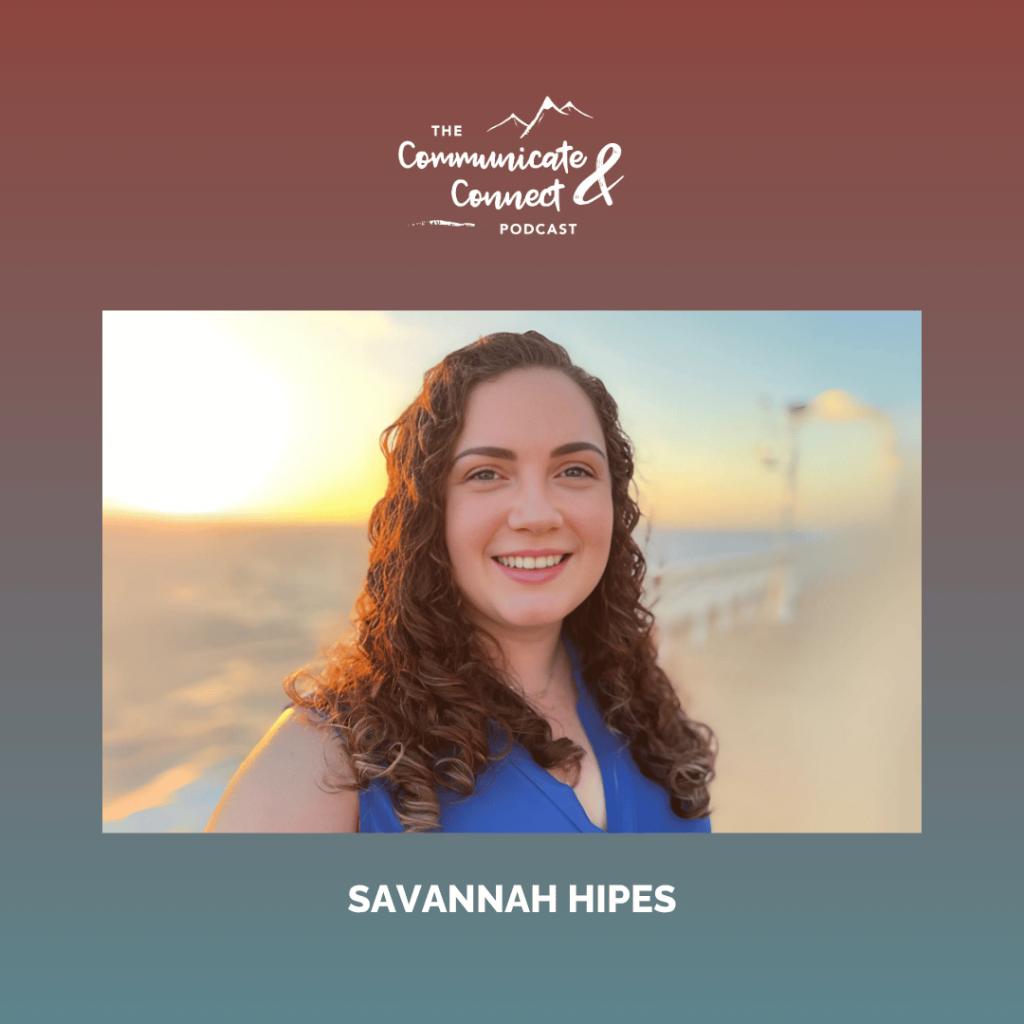
Savannah Hipes, LCSW, DBSM, is an Insomnia and Anxiety Specialist. She helps highly driven, sleep-deprived professionals who feel exhausted and on edge to finally sleep through the night. Savannah teaches clients to navigate sleep issues using evidence-based treatments, and addresses commonly related concerns like nightmares, panic, trauma, and eating disorders. She sees clients in-person in Orlando, Florida and virtually throughout Florida, New York, & New Jersey.
Learn more about her at savannahhipeslcsw.com.
Email: connect@savannahhipeslcsw.com
Phone: (407) 720-9903
Free Relationship Pattern Assessment
Many couples assume they have a communication problem when they’re actually stuck in a relationship pattern that keeps creating the same conflict.
Take the free Relationship Pattern Assessment to discover what pattern may be keeping you stuck and learn what to focus on next.
👉 https://pages.communicateandconnect.com/relationship-quiz
Episode Transcript for “How to sleep better with anxiety with Savannah Hipes”
This podcast is sponsored by Communicate and Connect Counseling, where we have a team of therapists who provide individual couples and family therapy services, all tailored to meet the needs of military and veteran families. To learn more about our services, visit www.communicateandconnect.com.
Welcome to the Communicate and Connect podcast for military relationships with your host, Elizabeth Polinsky, a military marriage counselor. If this is your first time listening to the Communicate and Connect podcast, please take a second to go rate review and subscribe to make sure you get all our future episodes.
We also really wanna know what it is you love about our podcast, and if for some reason you’re not loving it, we wanna know that too because we’re committed to providing the best quality content to help you improve your relationships.
You’re listening to episode 64, How to Sleep Better With Anxiety with Savannah Hypes.
Meet Savannah Hipes
Savannah Hipes: Hi. Thanks so much for having me here. I’m excited.
Dr. Elizabeth Polinsky: Yeah, I’m excited to have you. I’ve wanted to have you on for a long time, Savannah, but we’ve just backed up with a lot of people interested in being on the podcast. So grateful that you’re willing to come on and excited to have you on now. Especially to talk about sleep because that can have a huge impact on individual mental health.
Dr. Elizabeth Polinsky: And then of course, I know even with my own husband, if I’m lacking sleep, I’m very cranky. So then it, um, it can impact our relationship too. But maybe we can start off and you could just tell us a little bit about you and your experience working around sleep.
Savannah Hipes: Yeah, sure. So, hello friends, everyone listening.
Savannah Hipes: Thanks for joining us. I’m Savannah Hypes. I’m a licensed clinical social worker and sleep and anxiety therapist, and I specialize in working with highly driven, sleep deprived professionals who feel exhausted on edge and just ready to sleep through the night. I primarily work with adults and I have a history in working with veterans.
Savannah Hipes: With Liz. We worked together at the VA in Pensacola, which is actually where I got my start with sleep. I’ve always been interested in sleep. I’m a very vivid dreamer, so even when I was young, I was kind of researching like, what is this about? What is this whole sleep process? And then with Liz at the va, there was just a fantastic post grad fellowship program that I had the amazing opportunity to participate in.
Savannah Hipes: And I got to specialize in learning how sleep impacts veterans and impacts civilians and learning how to help people work through the experience of insomnia.
Dr. Elizabeth Polinsky: Yeah, great. And you have a private practice now, right?
Savannah Hipes: Yeah, so I am licensed in Florida, New York, and New Jersey. I am based in Orlando, Florida, so you can see me in person there.
Savannah Hipes: And I do virtual across the other states. All right,
Dr. Elizabeth Polinsky: great. Yeah, and I think it’s so rare to find people who are really specializing in sleep and like how sleep and anxiety go together. You and I were talking a little bit before we started about how like PTSD and trauma and how that with sleep, of course there are tons of therapists that focus on anxiety and trauma and PTSD, but to have the sleep component is really a unique specialty that you have.
Savannah Hipes: Yeah, that’s something that I see come up as a problem a lot, that people will come to me and say, I’ve been working on my anxiety for ages and I still can’t sleep. Or they’ll say, I’ve been talking to my doctor about this for decades and I’ve been taking all these medications and I got my sleep study done and blah, blah, blah, and I’ve still not sleeping.
Savannah Hipes: And there’s just not a huge overlap of the people who have training on both ends and can integrate that.
Dr. Elizabeth Polinsky: Yeah. Great. So you’re gonna give us the rundown of what we need to do to sleep better,
Savannah Hipes: which is exciting. Absolutely.
Common Sleep Problems with Anxiety and PTSD
Dr. Elizabeth Polinsky: So maybe we could first start with like, what are some of the common sleep symptoms or sleep problems that people might be experiencing if they have anxiety or PTSD?
Dr. Elizabeth Polinsky: What might they be noticing that would help them know like, oh, something’s off. Mm-hmm. Off in my sleep.
Savannah Hipes: You’ll feel tired during the day, which is like maybe a first sign that you should be questioning what’s going on. And then you’ll start to have awakenings during the night. And this can look different for everyone.
Savannah Hipes: So for some people, they’re waking up in the middle of the night and they’re awake for a long time, maybe a couple of hours, and they’re feeling really frustrated about not being able to fall back asleep. And they maybe even experience some symptoms of panic in the middle of the night. Like they wake with their heart racing when their mind is like churning and they can’t slow down and have their body calm down enough to get back to sleep.
Savannah Hipes: Or sometimes they might experience, like once they’re asleep, they’re asleep, but it takes hours to fall asleep. And something to note too is that I. If you start noticing feeling anxious, like feeling kind of tight or jittery in your body, or having thoughts about sleep as it just starts to get dark out.
Savannah Hipes: If you’re anticipating, oh, I don’t know how tonight’s gonna go, oh, I hope I sleep tonight. If those thoughts are coming to your mind in the evening, that’s a good cue that this has been going on long enough that it needs someone to take a look at it.
Dr. Elizabeth Polinsky: Yeah. Oh yeah. I was just thinking about someone who I was talking to recently who told me that they really couldn’t sleep at night.
Dr. Elizabeth Polinsky: Like they didn’t even get tired until five or six in the morning. I.
Savannah Hipes: Mm. Uhhuh. So what’s crazy about this, you’re making my brain churn. Yeah. Is that with sleep, there are so many different issues with sleep that come up. So there’s insomnia, which is trouble falling or staying asleep. But then there’s also other conditions, and especially with.
Savannah Hipes: Both active service members and veterans, there can be circadian rhythm issues where maybe they’ve worked on a shift schedule or really inconsistent work schedule for a long time and their body doesn’t know when to get tired, so it gets tired at all the wrong times. And if they’re not getting tired until five or 6:00 AM it’s very possible they’re experiencing a circadian rhythm disorder.
Dr. Elizabeth Polinsky: So interesting. Yeah, so I’m hearing these are all good signs to maybe talk to somebody who really specializes in sleep because it could be something as simple as, we just need to get you more sleep. It could be, it could be something much more intense, like a whole circadian rhythm disorder where your body doesn’t even know when to sleep.
Savannah Hipes: Yeah. I think an issue for a lot of people, and I’ve heard this over and over again, is that they just assume, oh, I’m stressed, or It’s fine if I’m not sleeping. Like it just doesn’t feel like a big problem to them. And if you have the energy you need during the day and you’re not experiencing deficits, then great.
Savannah Hipes: But. Many people, and I would guess that especially active duty service members hesitate to acknowledge their own troubles or weaknesses. And so if they’re not sleeping well and it is causing some daytime dysfunction, they might be hesitant to acknowledge that, and that can be a really big issue. There are ways that we can treat this that don’t take too long and are really effective, but you could experience a lot of dysfunction and long-term damage over time if you ignore it.
Savannah Hipes: So that’s just something I thought of while you were talking that Oh, there’s just this idea that, oh, it’s not, I’ll sleep when I’m dead. Or like maybe when I get back from deployment, or maybe when something changes, I think it’s gonna change. And how long have you told yourself that though?
Dr. Elizabeth Polinsky: Yes. And something you said really stood out to me.
Dr. Elizabeth Polinsky: If I ignore the problem, it grows and it gets bigger and it becomes a bigger problem down the road.
Savannah Hipes: Mm-hmm.
Dr. Elizabeth Polinsky: You didn’t quite word it that way, but that was the gist of what I was hearing and I was like, oh, that’s so much stuff in life. Mm-hmm. That it’s, the sooner you can get assistance with it, the better.
Savannah Hipes: Yeah, absolutely. Especially I think when we’re talking about service members, the rates of insomnia, for example, in the general population are like 10%, but in active duty service members that doubles and then with veterans that quadruples. So they, they really are experiencing this way more than us as providers might think when we’re just seeing civilians and it’s a huge contributor to.
Savannah Hipes: Long-term mood disorders, suicidality, cardiac problems, early death, dementia, like all the, there’s a lot that can happen when you deprive yourself of sleep for a long time. And that’s often I think, what sometimes the job requires of you in the military. And we don’t really acknowledge that there’s some ways that that’s gonna bite us later if we don’t pay attention to it and make some adjustments when we discover that it’s an ongoing issue.
Dr. Elizabeth Polinsky: As you’re talking about that, I’m also starting to think about the ripple effect. So maybe this is the ripple effect for the individual mood disorders, increased suicide thoughts, all of the stuff you just mentioned. But then I’m thinking for the military family, if my partner. Or my service member is not getting enough sleep is tired all the time.
Dr. Elizabeth Polinsky: They’re gonna be, I’m grouchy if I am tired. I’m also really grouchy if I’m hungry. But you know, it impacts my partner when I’m in that space. And then oftentimes, couples are coming in talking about difficulty with anger and irritability, and that it’s hard for them to feel close, to feel connected, like their relationship is going well when there is.
Dr. Elizabeth Polinsky: So much frustration that keeps happening between them. And sometimes the frustration isn’t even necessarily about their dynamic or them having conflict. I’m thinking a lot of times it’s because I’m snappy when I’m sleep deprived. Or again, in my case, if I’m a hungry, I can be uhhuh very intense, but then it can start the conflict between.
Dr. Elizabeth Polinsky: Mm-hmm. Because I’m deprived of basic needs or Absolutely. Yes.
Savannah Hipes: Not to get too researchy, but there are scientific studies that show that if we don’t get time in, like REM sleep for example, that’s a certain stage of sleep where we often have a lot of dreaming when we don’t get as much time there. Our facial recognition decreases specifically related to emotion, so if someone is neutral, we’re more likely if we don’t have as much REM sleep to interpret their neutral facial expression as negative.
Savannah Hipes: Versus if we get the REM sleep we need, we might be more likely to interpret it as positive.
Tips for Better Sleep
Dr. Elizabeth Polinsky: That’s really significant. Savannah, I did not know that. And wow. Because I’m just thinking like somebody’s just, I don’t know, doing whatever they’re doing. Emptying the dishwasher, and if you’re interpreting their face as like a negative emotion just because you don’t have enough sleep, then of course if my partner looked like he had a negative emotion on his face while he was emptying the dishwasher.
Dr. Elizabeth Polinsky: I’m gonna be annoyed. I’m gonna be like, why are you upset? Why aren’t you talking to me about it? Are you mad at me? And it’ll start a whole thing. Mm-hmm. Um, so I’m thinking that the solution maybe then is to improve your sleep. And if you have some tips for how people can improve their sleep.
Savannah Hipes: Definitely.
Savannah Hipes: So the first thing that I always tell people to start with is solidifying your schedule, which I know can be really difficult depending on, you know, the job or the deployment you’re on or what your situation is. But having a specific wake up time every day that’s consistent is the first thing you can do to help your body know what time it is.
Savannah Hipes: And the reason that’s important is because your brain, based on what time it thinks it is, sends signals to the rest of your body, telling it what to do, telling it what to feel when you know, when to feel hungry, when to feel alert, when to feel sleepy. It sends out all your different hormones and chemicals at different times, and it’s really fine tuned at doing this, but it can get confused if your brain doesn’t know what time it is.
Savannah Hipes: And our brains only know what time it is based on the light exposure that we get and the routine activities that we do throughout the day. So if some days you wake up at 6:00 AM and you get light exposure at that time, and then other days you don’t get up and expose yourself to light until eight or nine, you’re giving your body inconsistent signals and it’s less confident as to when it’s gonna send you the signal in the daytime to be alert and it’s less confident about when it’s gonna tell you to start getting sleepy.
Dr. Elizabeth Polinsky: Okay, so I’m hearing as much as possible having a schedule. And making sure that it’s at the same time every day.
Savannah Hipes: Yeah, which can be tough when weeks are different, or if you have a rotating work schedule, that can be really difficult. But the best that you can do, try and keep it close, as well as making sure that you get daylight.
Savannah Hipes: You know, if you get up, but you don’t. Turn any of the lights on and you don’t open a window and you don’t go outside. Especially for us work from Homers, maybe it doesn’t even matter that we got up because we’re not getting that daylight exposure. Okay. And our brain
Dr. Elizabeth Polinsky: needs it. Okay. So the daylight exposure is also important.
Dr. Elizabeth Polinsky: It’s waking up at a consistent time if you can, and then also like seeing the sun. Mm-hmm. It’s not just vitamin D that you’re getting. You need it to help your body know how to be awake.
Savannah Hipes: Yeah, exactly. You know, as soon as you start getting that daylight, your brain starts sending a signal to the rest of your body saying, oh, it’s daytime time to be alert.
Savannah Hipes: And that signal grows throughout the whole day. And then once it’s getting dark out, it starts weaning off that signal, which is what helps your body to know, okay, we’re gonna get sleepy soon.
Special Considerations for Shift Workers
Dr. Elizabeth Polinsky: Great. And I’m thinking, do you have any tips for people who are maybe on a shift schedule that can help them if they can’t always be so consistent?
Savannah Hipes: So this is a place where I would say it might be helpful to speak directly with a sleep provider, because it’s gonna be specific based on your work schedule and your shift. There are ways that we can help your brain to do its best to know what time it is, even when that shift schedule is changing. And it might involve wearing sunglasses and a hat at a weird time of day, or even having a bright lamp that simulates daylight and shining it at your face at a strange time of day.
Savannah Hipes: To manipulate what time your brain thinks it is. So there are definitely ways to do that, but working with a behavioral sleep medicine provider would be the right way to go for that. And it might even be useful for me to mention here the different kinds of sleep providers.
Dr. Elizabeth Polinsky: Yes. Yeah,
Types of Sleep Specialists
Savannah Hipes: please do. So, behavioral sleep medicine would be a therapist or some physician who’s trained in.
Savannah Hipes: The medical, but also more heavily the behavioral side, like the anxiety and the different shifts that you can make in your sleep based on your behaviors, like things that you choose to do differently, such as shifting your circadian rhythm based on when you get up, when you get in bed, when you expose yourself to daylight and insomnia is a behavioral sleep medicine treatment.
Savannah Hipes: So it’s very much making adjustments to your body’s sleep rhythms, using changes in your behavior. But there are other sleep professionals as well. If you go to your primary care doctor and say, I’m having trouble sleeping, depending on what the issue is or what they think it might be, they could refer you to a pulmonologist because you might be having pauses in your breathing at night.
Savannah Hipes: That would be indicative of possible obstructive sleep apnea. Which is common in veterans. It also can look like anxiety. So at night, if you wake up and you feel panicky and you feel like maybe you were gasping or your heart is racing, or you just feel a bit of like adrenaline, it’s possible that your body paused.
Savannah Hipes: Its breathing while you were asleep. And in order to get you breathing again, it has to like give you a little bit of adrenaline to wake you up so that your breathing will restart. So that’s an important piece to note is that there’s a lot of different sleep problems and there’s different professionals you can go to.
Savannah Hipes: So you might go to a pulmonologist for that, or you might go to a psychiatrist if it’s a chemical change, there’s a medication that’s getting disrupted in your system that’s causing an issue. Or you might get referred to a neurologist. If you’re also having some cognitive problems and you’re not sure about maybe different behaviors happening in your sleep.
Savannah Hipes: If you’re sleepwalking, if you’re up at night and you’re asleep, but you’re moving around and you’re throwing things but you’re still asleep, that would be a great reason to go to a neurologist. ’cause something’s happening in your brain that’s causing a disruption there. So there’s kind of a wide span of people that you can see.
Dr. Elizabeth Polinsky: Yeah, I’m hearing because if you’re on a shift schedule or if you have something, well, if you have something a little more unique going on, you’re gonna need a little bit more of a unique specialist for that. Okay.
Savannah Hipes: Yeah. And your PCP is a good place to start, but they often won’t have all of the detailed information that you need.
Savannah Hipes: So usually they’re gonna hopefully be referring you to someone who knows more than them. Or you can start with a behavioral sleep provider like myself. To help identify, is this something that we can change without medication or without medical intervention, or is this something that, no, we need to go to the neurologist first and rule out some of that other stuff.
Dr. Elizabeth Polinsky: So maybe we can talk more about like, if it’s not so unique, like maybe like I know that I have anxiety or I know that I have PTSD, or I know I just don’t have good sleeping habits. Mm-hmm. What are some things that somebody could do to help them improve their sleep if they know that it’s anxiety related or behavioral related?
Behavioral Techniques for Better Sleep
Savannah Hipes: Something that’s specifically anxiety related that I do with a lot of people is tactical breathing and progressive muscle relaxation. So these are methods that help your body switch from, I always confuse these two words. I. Is sympathetic nervous system, the activating one. They help you switch from the sympathetic nervous system to the parasympathetic nervous system.
Savannah Hipes: Basically, you’re switching from being really active and your body like being prepared to fight off an attacker or go get something done or do lots of thinking. You’re switching into a restful state where your body is. Decreasing muscle tension, lowering your heart rate, lowering your blood pressure, just moving into physical rest.
Savannah Hipes: And the way we do that, progressive muscle relaxation is my favorite. We actually tense your muscles really tight, like we activate the muscles and then we release them. And by doing that, we pay specific attention to what those muscles feel like. A lot of people don’t realize that they hold a lot of tension in their body, just like.
Savannah Hipes: Throughout the day, especially when you’ve had military experience, you’re really trained to be on alert, on guard, and your body learns to do that. It stays at the ready, but at the ready isn’t effective for sleep. And especially if you’re a person who experiences anxiety, you’re much more likely to be at the ready to an extended period for a long amount of time.
Savannah Hipes: You kind of lose the natural switch into rest, and you have to retrain your body to do that. And so how we do that is by every day for a couple of minutes, you practice tensing your muscles to like notice, okay, where’s the tension? Here it is. And then releasing that tension and noticing what it feels like to actively let go of that physical muscle tone, which is just something we don’t do a lot.
Savannah Hipes: We usually just hold it. And so doing that over and over trains our brain to do it more automatically. Like when we do it, we’re doing it intentionally. But the more you practice it, your brain gets used to noticing on a subconscious level throughout the day when you’re carrying that tension and releasing it without you having to put a whole lot of thought into it, which readies your body for being able to fall asleep.
Savannah Hipes: If your brain is more able to notice tension when it’s there and let go of it when you’re ready to go to sleep, you’ll physically be prepared for that. Versus if your brain doesn’t do that very regularly, you’re gonna try and get in bed and you’re still gonna be like this and maybe you don’t even realize it.
Savannah Hipes: ’cause that’s how you’re used to being. I.
Dr. Elizabeth Polinsky: I’m hearing this is a specific activity exercise that you can do, but I’m also thinking that it’s sort of building awareness, like building awareness of when is my body activated and more tense. And as you practice that, you’d be more aware of like if during the day if my shoulders are tight or if that was the case.
Dr. Elizabeth Polinsky: Before going to bed, and then you could do something like that to relax again.
Savannah Hipes: Mm-hmm. Yeah. Okay. I like to point out that it’s different from like imagining butterflies and just trying to feel calm and peaceful. You may not immediately feel calm and peaceful, but you’re training your body and your muscles to have a response that is letting go as opposed to holding tight.
Savannah Hipes: That can sometimes make it easier for people who don’t wanna be too like froufrou about it. Because it really is effective and research shows it changes, like it changes your heart functioning, it lowers your blood pressure, it lowers your core body temperature. Things that we wouldn’t think are voluntary, and yet when we do this voluntary activity.
Savannah Hipes: That’s the result. So cool.
Dr. Elizabeth Polinsky: Yeah. Okay. Well, I’m just thinking we have a lot of couples or like military spouses who might also be listening to this podcast and they might be noticing some of the things that you’ve talked about. Like if the service member is not aware or maybe they are aware and it, they’re not really thinking it’s a big deal, but the spouse might be thinking it’s a big deal.
Dr. Elizabeth Polinsky: Do you have any thoughts about like how to communicate to your partner about like, Hey, I think maybe you should see a sleep specialist or something like that.
Communicating Sleep Concerns with Your Partner
Savannah Hipes: I think sometimes it can be helpful to lean into recognizing like, what are the day to day impacts of this? What are the ways that you see that impact the person in their day?
Savannah Hipes: Because maybe they’ll say, oh, whatever. You know, I sleep five hours and I’m fine. And the other person might say, okay, well, what I’m noticing is that during the day, you know, you’re kind of snapping at me and it doesn’t seem like. It’s hard to find, you know where that’s coming from, and I also notice that maybe you’re yawning or I notice even while I’m laying in bed next to you, I am hearing you toss back and forth and I’m feeling like the heat of your body as you’re getting frustrated laying in bed.
Savannah Hipes: And I hate to experience that next to you, you know, knowing that you’re not getting good rest. Okay. Or especially if your partner notices that you are pausing and breathing during your sleep, or if your partner hears like a gasping sound or loud snoring. Yeah, those are indicators of obstructive sleep apnea, which the person may not have any other symptoms of, and they have no way of knowing that they’re experiencing that during the night.
Savannah Hipes: But it causes a lot of daytime sleepiness, and it significantly increases like car accident risk and other kinds of dangers related to your daytime activity because your brain is getting way less sleep than you think it is because it has to like jolt you awake every now and then to restart your breathing.
Savannah Hipes: So maybe just mentioning those things and saying, I’m concerned there are people that know about this. This isn’t like a, I have to live with this forever type of thing.
Dr. Elizabeth Polinsky: The things that I heard you do when you were maybe giving that example there is you were pointing out very factual things, like I’m noticing yawning or snappiness or gasping or something.
Dr. Elizabeth Polinsky: Mm-hmm. Like you’re so point out. A factual thing versus stating something like, you have a problem, you should, yeah. Go see somebody. Like point out facts. And then I also heard you using a lot of I statements maybe of, I have noticed this, or I feel concerned about this. Here’s my opinion. Where it’s a lot of, I’m talking about me also in that as uh, ways maybe to make the conversation a little bit easier to have.
Savannah Hipes: Yeah, absolutely. Because you can’t determine what someone else is experiencing. You can only state what you are experiencing and what you’re observing, and something that, I don’t know exactly how a partner would communicate this necessarily, but something that I just like to inform people about is that while yes.
Savannah Hipes: We’re doing like mental health related discussion when we’re talking about sleep and anxiety and trauma really affects sleep. There’s also a way to go about it where we don’t really have to get into too deep of that stuff. I think a lot of people, I. Feel concerned to come in and say they have a problem because they don’t want to address all the other things they know might be related to that.
Savannah Hipes: Especially if there’s trauma in the background or nightmares they’re experiencing. They’re like, I just don’t even wanna deal, so I’m not gonna introduce this thing. ’cause it’s just gonna lead to like all the other stuff. And I actually would like to share that there’s a lot of ways that we can make changes to this just physical behavioral piece.
Savannah Hipes: Where we may not even have to go into all the rest of this stuff if that’s not where you’re wanting to go, and it might not be that all that is causing this. It might just be that we do a timing shift. Or a light exposure shift or something else here that is not so scary and is actually very quick to do.
Dr. Elizabeth Polinsky: I’m really glad you’re pointing that out because what I’m hearing in that is even if it is trauma related or something, you can go in work with a sleep specialist like you Savannah, and have a lot of improvement just from fixing sleep without really ever having to touch the trauma or talk about whatever happened.
Savannah Hipes: Mm-hmm. Absolutely. And if you do trauma treatment, sleep is usually one of the only symptoms that kind of hangs on afterwards. So it can be a great thing to do after you do trauma treatment. But the same as vice versa. Maybe you don’t ever really wanna address trauma to its full extent. Maybe you know something’s going on there, but you’re like, I don’t know that I wanna go there.
Savannah Hipes: Addressing the sleep can be effective in helping some of this get a lot easier or start to kind of decrease in its intensity.
Dr. Elizabeth Polinsky: Yeah, and just improve everyday life a little bit too.
Savannah Hipes: Mm-hmm.
Dr. Elizabeth Polinsky: To not be so tired, not so irritable or those sorts of things.
Savannah Hipes: Yeah.
Dr. Elizabeth Polinsky: That’s really good to know because I’ve had many individuals with PTSD, but also I’ve had couples where both partners have PTSD.
Dr. Elizabeth Polinsky: Um, there can be a lot of nervousness about going and getting therapy for PTSD of like, I don’t wanna relive everything. And so it’s nice to know that the sleep piece can be improved and that can take you pretty far, even if you don’t wanna touch the other stuff just yet. Yeah, absolutely. Great. Well, Savannah, if somebody wanted to work with you around sleep or anxiety, how could they connect
Savannah Hipes: with you?
Savannah Hipes: So you can check out my website, which is savannahipeslcsw.com. I’m also on Instagram, Facebook, and I know you’ll link my other contact information. I would be a great person to reach out to if you’re not really sure where to start. Start. You’re like, I know something’s up with my sleep and it has been up for a while, but I don’t even know which direction to go in.
Savannah Hipes: I’d be happy to chat with you and help you figure out, should you not even be talking to me? Is this a pulmonologist issue? Is this a medication issue? We can kind of figure that out together, especially I would be great to work with if you know that you’ve been experiencing. Long times awake during the night, long times trying to fall asleep.
Savannah Hipes: Nightmares, whether they’re trauma related nightmares or they’re more anxiety type nightmares. I do a lot of specific treatment to resolve that. And these treatments are, I’m gonna say short, this is not months and months of work. Typically, this is six to eight sessions and people see significant change.
Savannah Hipes: So I would love to chat with you, whoever’s kind of questioning this and help you figure out what might be a possible next step.
Dr. Elizabeth Polinsky: Yeah, wonderful. And we will include that in the show notes so that way people can just click from wherever they’re listening to this go to, and they’ll be directed to the show notes and be able to find your contact information there in case that’s easy.
Dr. Elizabeth Polinsky: But Savannah, thank you so much for being willing to be on this podcast, for sharing your expertise around sleep. I think that this can be really helpful for a lot of people and give. People ways to get started to improve their sleep. Me too. Thanks so much for having me. I hope you enjoyed today’s episode.
Dr. Elizabeth Polinsky: If so, please take a second to go rate review and subscribe so you get all of our future episodes. Make sure to check out the show notes. To sign up for our free 10 week relationship email course. This email course is really designed for people who are maybe having trouble with communication or connection in their relationship and helping them develop some quick wins right away to start improving it.
Dr. Elizabeth Polinsky: While I am a therapist. This podcast is for educational purposes only and is not considered therapy, and it should also not be a replacement for therapy. If you think you need a professional of any kind, you should definitely go find one. Until next time.


