

Episode Outline for “Attachment Theory and Spirituality with Dr. Bill Senyard”
Episode Summary of “Attachment Theory and Spirituality with Dr. Bill Senyard”
Welcome back to The Communicate & Connect Podcast with your host, Elizabeth Polinsky. Today, we continue our special series on attachment in relationships with a highly anticipated guest, Dr. Bill Senyard, who brings 25 years of pastoral counseling experience and a deep understanding of attachment theory principles. Before we dive in, remember to take our ARE quiz based on the brief accessibility, responsiveness, and engagement scale to assess the attachment dynamics in your own relationships.
In this episode, we’ll explore the profound questions of “can I count on you” and “am I worthy of love,” as we discuss how our earliest experiences shape our capacity for forming secure emotional connections. Dr. Senyard will guide us through the four quadrants of attachment theory—secure, anxious, avoidant, and disorganized—shedding light on how these styles influence our behaviors and relationships.
We also delve into the intersection of attachment theory and spirituality, examining how a relationship with God can provide a sense of security and value, aiding in emotional self-regulation. Dr. Senyard shares insights into how spiritual attachment impacts interactions in our relationships, with a special focus on the unique challenges that military families may face.
Through this journey, we’ll confront the fear cycle, understand how to express hurt constructively, and learn the role of pastoral and EFT marriage counseling in fostering secure connections. Dr. Senyard will also introduce his “good enough parent online” program, offering faith-based, scientific parenting tips catered to improving parent-teen interactions, a resource that’s especially relevant to our military families listening in.
Guest Speaker Bio – “Dr. Bill Senyard”
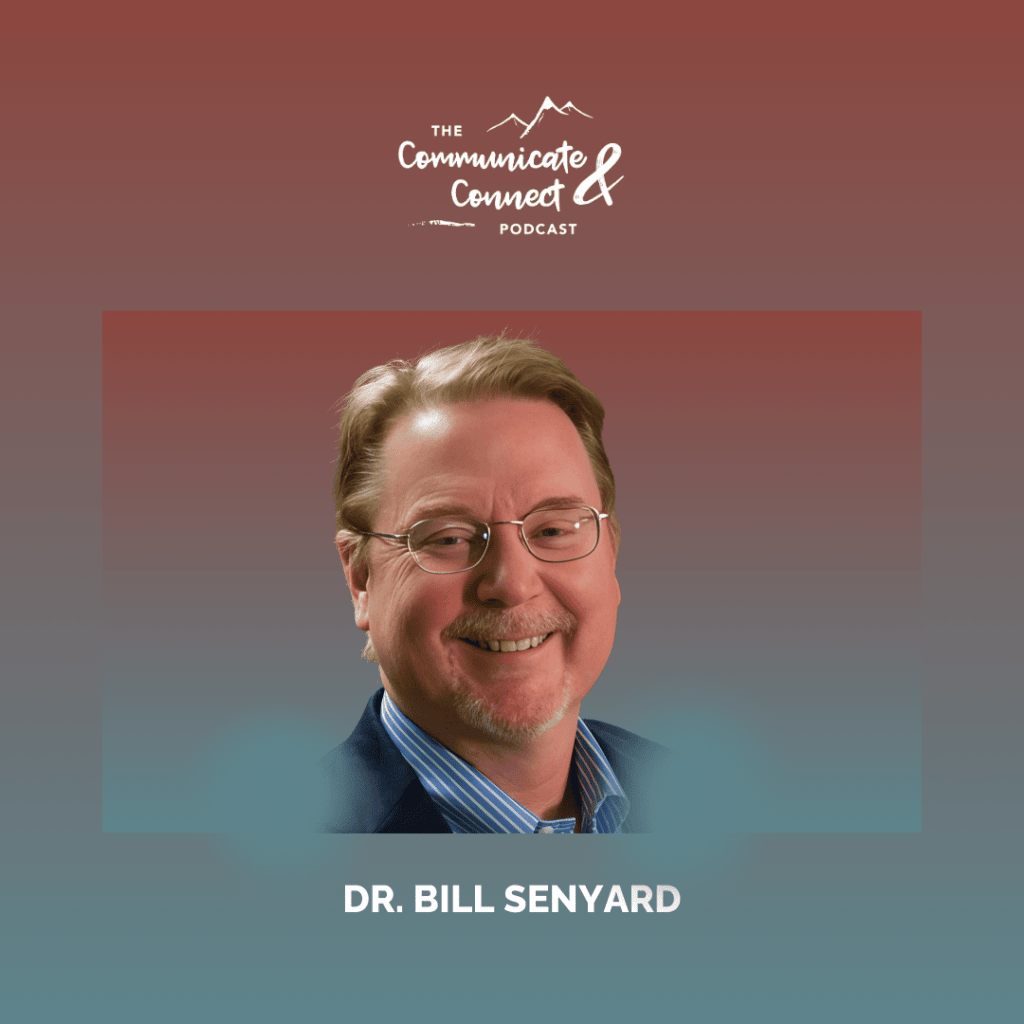
Dr. Bill Senyard is an experienced pastor, discipler, church revitalization specialist, lecturer and conference speaker with over 30 years as a local church pastor. He is the author of twelve books and two on-line experiential paths to help people who struggle with identity, relationships, shame, addiction, loneliness and forgiveness.
Dr. Bill is passionate about helping frustrated and beat up Christian parents of teens and tweens. Post-Covid numbers are coming in. Depression, anxiety, suicide ideation and violence are all on the rise. How our parents raised us just isn’t working well anymore.
Dr. Bill created a FREE online course (15 parent tips sent to participants one a day for 15 days) called “Good Enough Parent.” The phrase “good enough” comes from Attachment Theory researchers who suggest that it only takes 30% of really good interactions with children to be ‘good enough parents”—meaning that your child can likely enter into their next stage of growth more secure, less avoidant and anxious. 3 out of 10 is pretty doable. Parents can easily learn some simple tips that will help their child survive adolescence better. GEP is a blend of the gospel along with the latest in neuroscience and attachment theory.
Good Enough Parent (GEP) is a unique on-line evidence-based experiential journey/course designed to help frustrated and beat-up Christian parents of teens and tweens who struggle with feeling that they are just not good enough. It is totally FREE. Participants will get 15 short (10 minute) video tips– one-a-day for 15 days. Each tip is immersed in the Gospel and enhanced by the latest in neuroscience and attachment theory. There is nothing like it out there.
Check it out here at www.goodenoughparent.online.
Free Relationship Pattern Assessment
Many couples assume they have a communication problem when they’re actually stuck in a relationship pattern that keeps creating the same conflict.
Take the free Relationship Pattern Assessment to discover what pattern may be keeping you stuck and learn what to focus on next.
👉 https://pages.communicateandconnect.com/relationship-quiz
Episode Transcript for “Attachment Theory and Spirituality with Dr. Bill Senyard”
Elizabeth Polinsky [00:00:00]:
This podcast is sponsored by Communicate and Connect Counseling, where we have a team of therapists who provide individual, couples, and family therapy services, all tailored to meet the needs of military and veteran families. To learn more about our services, visit www.communicateandconnect.com.
You’re listening to episode 40, Attachment Theory and Spirituality, with Dr. Bill Senyard. Hey everyone. Welcome back to the Communicate and Connect podcast. I’m really excited because Today we have Dr. Bill Sinyard to talk about attachment theory and spirituality.
Elizabeth Polinsky [00:00:54]:
So not only is he a doctor, but he’s also a pastor. And I think this is going to be really helpful, especially because oftentimes faith is such an important part of a couple’s journey and, and there are a lot of couples who are faith based, so I’m glad you can add this in. So why don’t you just tell us a little bit about yourself and kind of your experiences and how you got into attachment.
Dr. Bill Senyard [00:01:22]:
Yeah, so I’ve been a pastor for 20, 25 years. I actually been doing my own thing, the gospel app, for seven years after that. And my, my pass to help people frustrated and weary and beat up people actually feel better about themselves. And in, in my particular case, my leaning would be to make it faith based in their relationship with God. But there’s, there’s principles from neuroscience and attachment theory that, that are universal and, and we, we could be taking advantage of them. So I’m trying to get those out on podcasts like this.
Elizabeth Polinsky [00:01:58]:
Yeah, great. How, how did you get into attachment theory? Because, you know, obviously I love it, but it, it’s like foundational to the field of marriage and family therapy. I, I don’t think I’ve really heard many pastors like, talk about theory. Like that’s separate from, I guess theology.
Dr. Bill Senyard [00:02:22]:
Yeah, yeah, I don’t tend to separate them as much as most do. So that’s interesting statement. I mean, I think you’re right. I think your observations are right for me. Necessity. I was after seminary, I was 35 and I was thrown into a church, church plant that we started at a very, very non Christian area of southwestern Canada by Vancouver. And the people that started coming were, were very needy. They were a lot of rape victims, attempted murder victims.
Dr. Bill Senyard [00:02:49]:
We had, we had, oh my gosh, it was in some ways a, a sitcom. And, and I had to come to grips with things that I had not dealt with. And, and I would say just straight up, I’m shame prone. And I’ve been to lots of counseling. I could tell you why for the most part, but I wasn’t able to relate that to myself, to my theology, to, to my identity. I was just, in attachment theory terms, avoidant.
And I was sitting in a, in counseling at seminary, at the very end of my seminary experience with a spiritual formation, past a professor. And right then and there, I mean, if I, if I had say it, I mean, I had this spiritual moment where my life passed before my eyes and I realized that I had been destroying relationship after relationship after relationship because of avoidance.
Dr. Bill Senyard [00:03:41]:
And what I realized there in that moment was not just that God loved me. I experienced that 15 years earlier when I became a Christian. But that this maybe sounds strange, but I actually got that he liked me. And I had been in relationship with him, a Christian for 15 years, and didn’t believe that. I mean, I thought I did, but I clearly didn’t. And I fell into depression. And Dr. Houston kind of worked with me on the way out and I had to really come to grips with a lot of things.
Dr. Bill Senyard [00:04:11]:
And neuroscience, attachment theory and the gospel, all three kind of work together to help me out. So for me it was. I was in trouble.
Elizabeth Polinsky [00:04:21]:
Yeah, and such a personal journey too. Like, I think all, all of us who end up in a helping profession of some kind often have our own journeys, as does everybody. But what I’m really hearing is through my own journey and realizing that my own attachment style and how that played out not only in my relationships, but also my relationship with God. Yeah, that was kind of the, the starting point for your passion around attachment.
Dr. Bill Senyard [00:04:50]:
Well, I mean, if I, you know, in attachment theory, I was avoidant, which means I’m doing pretty well on my own and I’d rather not have other people’s problems. And I’m called to be a pastor.
Elizabeth Polinsky [00:05:01]:
Yes, very hard to not have other people’s problems as a pastor. So I could see the conflict there.
Dr. Bill Senyard [00:05:07]:
Conflict.
Elizabeth Polinsky [00:05:08]:
So let’s do a refresher on attachment. So how do you typically explain attachment theory to people you work with?
Infant Attachment Theory Explained
Dr. Bill Senyard [00:05:17]:
Yeah, attachment theory always begins in infancy. The work that was done early on by Bowlby and such is that infants between the third trimester of pregnancy and year two, their brains developing and for however they are treated is the nature issue, not the nurture. I mean the nurture issue versus nature. However they’re treated, they develop to one degree or another, inner working models that affect their ability to self regulate, to form relationships, to hold on relationships for the rest of their lives to some degree or another.
And so if they end up after the two year period of infancy, remember, they’re not even thinking at this point, it’s not like they can shape a thought, but if there’s enough attunement between their primary caregiver, typically a mother, but not necessarily could be any caregiver, but if there’s this, this intimate attunement between the baby and the caregiver, according to attachment theory, percent of the of the instances are interactions. So 3 out of 10.
And by attunement, I mean those intimate interactions where there’s parallel neurons happening, where there’s mirror neurons happening, where there’s dopamine going and oxytocin going and there’s a strong connection and the child feels like there’s someone there for them, they will enter the next period, the stage of life being secure. And secure means that they’re willing to explore the world.
Dr. Bill Senyard [00:06:43]:
They, they, they think that the world’s kind a little. They think that they can trust adults more, and they tend to be happier. They tend to do better in school. They tend to be more socially energized if they are not secure. Here’s a study that was done. I think I’m quoting Gabor Mate. I think. But anyway, infants who, who are insecure, but even by two years old, when they become adults, they have difficulty understanding their own emotions and feelings of others.
Dr. Bill Senyard [00:07:14]:
So they lack empathy a little, a little, or a lot, right? Not perfectly. They have limited ability to maintain stable relationships. They struggle to emotionally regulate meaning when they get blow up, they, they have a hard time tuning down on their own. They may subconsciously shy away from intimacy or erupt. They may be too clingy or anxious. They may. And, and they definitely tend to be more addictive as adults. So attachment theory just discovered that that important segment of time was very influential for children.
Dr. Bill Senyard [00:07:50]:
Now our brains have plasticity, so we can change that. We can lean into it throughout our entire lives, particularly during adolescence. And that’s a lot of my work right now is working with parents of teens and tweens, because during adolescence, the brain’s happening again and the neurons are being pruned. And we really are learning that we have a shot to help our children become more secure as they enter adulthood. So basically, that’s attachment theory in a nutshell.
Elizabeth Polinsky [00:08:18]:
I, I like that there. Well, there’s just so much that goes into it. Like you’re, you’re talking about, like, all the, the neurons that are firing. Also what it means to be attuned to somebody. You had mentioned, like internal working models, which, with my clients, I often talk about it as like a template. It’s the template that my brain and learns to have about can I trust people? Will they be there for me? Do I have value? Which then goes on to impact how I feel about myself, how I feel about other people, and how I interact and behave. Well, that’s that emotion regulation piece.
Dr. Bill Senyard [00:09:04]:
Yeah. Attachment theorists say that there’s two subconscious questions that we’re all asking infants, even even though we can’t vocalize it. There’s two questions in infancy. It’s really kind of one, it’s, are you there for me? So infant that’s crying in their crib, they’re crying and crying and crying. They could be wet, they could be hungry. It could be pain. They could be afraid. They could be lonely.
“Seeking Emotional Support: Is Anyone There?”
Dr. Bill Senyard [00:09:24]:
We don’t know. But what their brain is saying, is there anybody out there? Can anybody relieve. Can regulate these emotions? When we become adults, when we become adolescents and adults and teens, that they break up into two questions.
And these are the ones that I work with, adults in particular and teens. The first one is, can I count on you? Is there somebody out there that actually has my back? If not, I’ve got. I’ve got some approaches that I’m going to take if I’m anxious or avoidant, and we can talk about that. But can I count on you? Is there someone there? Even when I mess up, when I screw up, when I get caught, when I. When I have a breakup, when I.
Dr. Bill Senyard [00:10:04]:
In your case, in the case of your clients come back from deployment and there’s that awkwardness or. Or breakdowns, is there somebody or something I could count on? The second one is actually, am I worthy of anybody’s love? Is there anybody who just loves me as I am or in my faith, experience likes me?
Elizabeth Polinsky [00:10:24]:
Yeah, exactly. Yeah. To tie it back to your. Your experience. Absolutely. And so these fundamental questions, what I hear you saying is that even infants have this fundamental question, is somebody there for me? And the way that they internalize the answer to that then goes on to develop either kind of. Kind of in a way like their personality. In this case, calling it an attachment style of either secure or insecure.
Elizabeth Polinsky [00:10:58]:
With feeling like I can count on somebody. That’s the message that I learned in my infancy, up till two years, that I could count on people that helps me feel secure. But if I got the message I couldn’t count on somebody, then that would lead to an insecure style.
Dr. Bill Senyard [00:11:16]:
It’s. It’s hardwired to some degree or another. It can be changed, but it. But it takes intentionality and work and eft that. That you’ve been dealing into. That’s exactly, that’s the jam of eft, right, Is to work on those things.
Elizabeth Polinsky [00:11:30]:
Yes. Yeah. To help couples develop a secure attachment between the two of them. Yeah, that’s exactly what we do in eft. Couple therapy. So do you want to talk at all about the. You don’t have to, but the attachment styles, Because I know you describe that a lot to the people you work with.
Dr. Bill Senyard [00:11:50]:
Yeah, yeah.
Elizabeth Polinsky [00:11:51]:
Especially the insecure ones.
Dr. Bill Senyard [00:11:53]:
Oh, yeah. So there’s really four quadrants in the attachment theory. The, the secure one. Let me tell you what a secure person looks like and feels like. And that would be 40% of the population. That would be middle to upper class, majority population. It would, I’m sorry, 60% of that. 40% of those who live in more urban environments, who are under stress.
Dr. Bill Senyard [00:12:16]:
Maybe some of your clients who are, who are on the, who are deployed. But anyway, the secure individual, their identity cup is pretty full. They can focus on the needs of others. They could be more empathetic. This person is great in counseling because they get it. I mean, they’re glad to be there. They’ve developed an ability to emotionally self regulate. So when they get angry, everybody does.
Dr. Bill Senyard [00:12:37]:
They can, they can cool down quickly without blaming. They can make adjustments relationally on the fly. They’re good with differences, relational complexity. They’re comfortable expressing their own needs and wants. Again, they’re great in counseling. And they work hard to repair relationships because relationships have been good for them. One of the insecure quadrants is anxious. And the anxious person.
“Understanding Anxious Attachment Behaviors”
Dr. Bill Senyard [00:13:01]:
Here’s how someone put it. Being in a relationship with someone who is acting out an anxious attachment style can feel like dealing with an angry customer. Staffing a support complaint desk. So they need, they still need others to emotionally regulate for whatever reason. Their caregivers and parents didn’t instill that ability. They, they didn’t help them enough that they picked it up. So they actually use other people in their relationship to emotionally regulate. They worry about being abandoned, dismissed, overlooked, betrayed, fear of, of, of missing out.
Dr. Bill Senyard [00:13:35]:
That’s this category. They externalize. They blame others readily. I mean, you can probably picture some of your clients, they tend towards perfectionism. So this would be the person who works really hard to achieve, maybe a person who, who, who’s in the seals or the right special forces because they feel like if, if they rise up, they will be noticed. And so they’re not doing it for healthy reasons. They’re doing it to emotionally regulate.
Elizabeth Polinsky [00:14:03]:
I’ve also heard, like a lot of my clients where there is someone who had a more anxious attachment style that developed from their childhood. Like a strong desire to be good enough. Because on the inside I’m thinking someone’s not going to be there for me unless I’m good enough.
Dr. Bill Senyard [00:14:23]:
Exactly right.
Elizabeth Polinsky [00:14:24]:
So working really hard.
“Managing High-Maintenance Emotional Needs”
Dr. Bill Senyard [00:14:26]:
That’s right. They love the atta girls and atta boys. They need credit. They will, they will always try to get credit in a situation. At the extreme. They’re quick to share unfiltered emotions, but it’s usually anger or, or, or depression, rarely joy. They’re high maintenance, but they’re considered high maintenance by their partners, by their, by their soul mates, by their friends or spouses because they keep bringing this stuff up. And when the fear cycle kicks in, it’s usually fear.
Dr. Bill Senyard [00:14:54]:
The avoidance. That’s me. We fear connectedness. Connectedness. Is there anybody there? I don’t, I don’t know that I’m afraid of it. But I’ve come to see over the years that I am because nothing has hurt me more than relationships. Nothing, no one is. Nothing has hurt.
Dr. Bill Senyard [00:15:10]:
Let me down more than relationships. It’s in my inner working model.
Elizabeth Polinsky [00:15:14]:
Right.
Dr. Bill Senyard [00:15:15]:
We can be self reliant, which I am. I can be stressed out by relationship issues of others. So if I have an anxious partner, I’m just going to be really tired. In counseling if they keep bringing this stuff up, I just want to move on. You know, Problem. What problem? We’ve dealt with that. We can have a high radar, highly sensitive radar for feeling like we’re being manipulated or used or blamed. We’re filtered emotionally.
Dr. Bill Senyard [00:15:40]:
I am so tired of counselors asking me where do I feel that stress lives. I’ve eventually just made something up just, just to get. Because I don’t feel that in my body. I’m just saying. So I just say my shoulders and they go, oh yeah. Yep, yep. So we move on. I’m avoidant.
Elizabeth Polinsky [00:15:58]:
Yes. Yes. That is a key feature of somebody who does have an avoidant attachment style is to be very disconnected from the emotional.
Dr. Bill Senyard [00:16:08]:
Very disconnected. A little strong. Little strong, yeah.
Elizabeth Polinsky [00:16:13]:
But that is something that is learned. And so like actually in eft couple therapy.
Dr. Bill Senyard [00:16:19]:
Oh my goodness.
Elizabeth Polinsky [00:16:20]:
We help people get reconnected with those emotions.
Dr. Bill Senyard [00:16:23]:
Believe me, I’ve been through eft and needed. Oh my gosh. Of course. I’m a big Johnson fan.
Elizabeth Polinsky [00:16:29]:
Awesome.
Dr. Bill Senyard [00:16:31]:
So. And, and we could be. I’m here. Passive aggressive. But that. I don’t think so. So, so those are the, those are the categories. So when you get, when you get an avoidant and so for instance, every rom com that has ever been produced by Hollywood is an avoidant.
Dr. Bill Senyard [00:16:51]:
And anxious personalities, the anxious, playing games. And the avoidant just can’t make a decision and move forward until they finally do. In the meantime, the person is trying to make the other person jealous and all the other things. Right. It’s. That’s a romcom theme. But it’s played out in most living rooms in the country.
Elizabeth Polinsky [00:17:08]:
Yeah, it’s. I suppose so. We do know from re. From research that oftentimes couples. And an anxiously attached person will partner with an avoidantly attached person.
Dr. Bill Senyard [00:17:21]:
Yeah.
Elizabeth Polinsky [00:17:22]:
But I will say that movies sometimes are like on steroids. You know, they’re a little, they’re a little.
Anxious vs. Avoidant Relationship Dynamics
Dr. Bill Senyard [00:17:30]:
I should introduce you to my friends. No, that’s true. Yeah, they exaggerate to make a point. That’s exactly true. Yeah, but, but it’s not uncommon to have an anxious personality, extreme anxious personality, have an affair and subconsciously. And the, the avoidant spouse is sitting back there going, why did they do that?
And the avoidant spouse is going, see, that’s why I’m closed up. That’s why I can’t share with this person. And the, the, the anxious spouse is going, why can’t that person open up to me and, and love me? And, and if you can, if you can, sit down with them as a counselor and say, so which of these questions did you try to answer? Is it, is it.
Dr. Bill Senyard [00:18:14]:
Is there somebody there for me? Or is it. Is, is there anybody there who actually loves me? And, and if you can help them identify which one is which, you can quickly identify which one’s avoidant, anxious and give them something to talk about.
Elizabeth Polinsky [00:18:29]:
That is a really good example of when the affair is done. Like, it’s the anxious person who went outside of the relationship. Avoidant attachment styles can have affairs also, but for them it’s more about, do you see me as good enough?
Dr. Bill Senyard [00:18:46]:
Yeah, that’s a good point. That’s a good point.
Elizabeth Polinsky [00:18:48]:
Yeah. So I, I just don’t want anyone listening to be like, oh, you must be anxious because you cheated. Or, or that. Or worried now that they’re. If they’re partnered, who’s anxious that that means they’re going to cheat because it can happen with either style.
Dr. Bill Senyard [00:19:05]:
Oh, my goodness. Yeah. I mean, two, two. Avoidance. Could, could their relationship get dissolved very easily and quickly over time? Yeah, totally. Right.
Elizabeth Polinsky [00:19:16]:
So we’ve covered kind of like the background of what attachment theory is really about. This kind of like personality development in early childhood and the different styles.
Dr. Bill Senyard [00:19:26]:
Yeah.
Elizabeth Polinsky [00:19:27]:
That develop and how those relate to those two core questions that people are asking. So help us like connect the dots for me on attachment theory and spirituality and how you, you see them like going together.
Dr. Bill Senyard [00:19:44]:
Yeah. So the answer to so spirituality effective, good spirituality would be, would be talking about this relationship that one has with, with God, in my case Jesus. And in that relationship, those two questions are answered positively and experientially. So, so for me, I have learned that I have one relationship where I can actually say there is somebody there for me. I’ve experienced him. I’ve experienced him when I’ve messed up. I’ve experienced him when, when I needed somebody and, and I, there’s somebody out there who actually loves me. The theologian John Calvin.
“Holy Spirit’s Inner Transformations”
Dr. Bill Senyard [00:20:21]:
He’s not known for this. He should be, but he says that the Holy Spirit, the secret workings. It sounds like a spy novel, but the secret workings of the Holy Spirit within the inner being of a Christian is to make Christians feel that love of God, that twofold love of God, because we’re in the same world that everybody else is and we get beat up the same way. And our inner working models, or put it differently, are critical. Inner voice says you’re not lovable. There’s, there’s nobody there for you. You’ve screwed up. You’re ugly, you’re overweight, you’re old, you, you’ve, you’ve screwed up that relationship.
Dr. Bill Senyard [00:20:58]:
You should have, you should have said that. You should have all of those things. So I have faith based people really do have one relationship they can, can lean on. And the idea is if we can get our emptied cups, our leaky cups filled a little bit with enoughness and connectedness that comes from that, we can actually overflow into other relationships. We can, we can be more secure.
Elizabeth Polinsky [00:21:22]:
I’m following. And so I don’t remember if I mentioned this already, but I’m, I don’t have a faith base myself and so.
Dr. Bill Senyard [00:21:30]:
I seem okay anyway, though.
Elizabeth Polinsky [00:21:32]:
Well, thank you, I guess. I, yeah, it’s just, I don’t, I don’t even try to dip into that world. I’d much rather have people who are trained, who have a faith based to guide people, you know, on that. And so what I’m hearing is that my, the relationship with God is also an attachment relationship where on the inside I can develop a sense of security, an internal knowing that someone’s there for me, AKA God and that, and that I’m valuable, that I’m lovable, that I’m like level.
Dr. Bill Senyard [00:22:15]:
Yeah, that’s, that’s exactly Right. And it’s in an attunement sense. When I talk about spiritual attunement, I can actually begin to learn how to rely on God to help me emotionally self regulate.
Elizabeth Polinsky [00:22:28]:
Okay. So from that security, from that security in the relationship with God that actually helps calm overwhelming emotions. Following the theory would actually help change my internal self critic would help me modify how I’m interacting in relationships. So from that secure bond with God that can overflow into the other relationship.
Dr. Bill Senyard [00:22:53]:
He’S imagined him to us as our parents. Yeah, yeah. So that would be a good enough parent, you know, one who actually attunes with me. So yeah, and I’ve experienced that and, and it has worked for me. Now for somebody who doesn’t have that relationship, I, I have a quote from Yuri Bronfen Bernard, a pretty well known child psychologist. I think this is fantastic and the same thing, but just in a non faith based way. Every child. And this would include adults too.
Dr. Bill Senyard [00:23:20]:
So I’ll say it. Every adult needs at least one adult who is irrationally crazy about him or her.
Elizabeth Polinsky [00:23:27]:
That’s so sweet.
Dr. Bill Senyard [00:23:28]:
Isn’t that great?
Elizabeth Polinsky [00:23:29]:
Yeah, I like that. Yeah.
Dr. Bill Senyard [00:23:32]:
And the idea is I don’t just need it once. I actually need that repeated to me over and over and over. So I’m reaching my midbrain and neuroscience. I’m not reaching my prefrontal cortex. I’m reaching my midbrain which takes think of addiction. I need form a new addiction. So I need somebody if I’m going to be, if I’m insecure, anxious or adult or fearful. That last category we didn’t talk about.
Needing Unconditional Emotional Support
Dr. Bill Senyard [00:23:54]:
But if I’m any of those, I need someone, a real person who can regularly be that adult who’s irrationally crazy about me. And they verbalize it. They, they physically show me that they’re there with me, particularly in the bad times. They’re not judging me, they’re not critical. And, and from a brain size perspective, I need that out 3 out of 10 interactions during the day. So ideally that’s a spouse, but sometimes spouses are so. Relationships are so fragmented and fractured that’s hard to come by. So.
Dr. Bill Senyard [00:24:32]:
But we need that relationship somehow or else the, the inner working models will just become critical. Critical suggestions over and over and over.
Elizabeth Polinsky [00:24:42]:
Yeah, I’m, I’m following. I’m still kind of like reeling from that quote. It’s like I almost, I like teared up even.
Dr. Bill Senyard [00:24:49]:
I know it’s, it’s, it’s a, it’s a gym. I know.
Elizabeth Polinsky [00:24:53]:
Yeah. Okay.
Dr. Bill Senyard [00:24:54]:
So good thing to Ask your clients, is there anybody? And I mean, who is it in your life is irrationally crazy? And, and I, you know, from a pastoral perspective and working with people in pastoral counseling, I would tell you that a lot of people would say I just don’t have that person anymore. Or maybe I never did. It’s sad.
Elizabeth Polinsky [00:25:15]:
It is, yeah. It, it absolutely is. I think from, from like an eft marriage counseling perspective, that is what we’re creating in marriages.
Dr. Bill Senyard [00:25:24]:
Oh, yes, it is. That is. That’s right.
Elizabeth Polinsky [00:25:27]:
Yeah. But from the pastoral, I guess, perspective, that’s what you are working to create in the relationship with God.
Dr. Bill Senyard [00:25:36]:
Yeah, I try to be that for, for people that I’m working with. Yeah. Do. Do the best I can, but I’m avoidant, remember?
Elizabeth Polinsky [00:25:45]:
Yeah, yeah. Well, ultimately they’re not forming an attachment with you, they’re trying to form an attachment with God. Yeah.
Dr. Bill Senyard [00:25:53]:
Not so clear all the time.
Elizabeth Polinsky [00:25:55]:
Yes, I believe that. Yeah, I believe that, that, that you would sometimes stand in and be seen as a proxy for God in that way.
Dr. Bill Senyard [00:26:05]:
That’s been one of the major failings of churches is one person gets in that position and they don’t. How can I put this? They, they don’t let God be God.
Elizabeth Polinsky [00:26:18]:
Yeah. Oh, yeah. That, this, this goes into a whole much. A whole different conversation that would be much longer around like power dynamics and things like that.
Dr. Bill Senyard [00:26:28]:
Exactly right. Exactly right.
Elizabeth Polinsky [00:26:31]:
So when you think about. We’ll go back to God, attachment and spirituality, we’ll avoid that conversation.
Dr. Bill Senyard [00:26:37]:
Let’s do that.
Elizabeth Polinsky [00:26:38]:
Yeah. When you think about how, how thinking about attachment also as a spiritual endeavor.
Dr. Bill Senyard [00:26:46]:
Yeah.
“Marriage: Prioritizing Holiness Over Happiness”
Elizabeth Polinsky [00:26:46]:
And in some ways. Okay, so I did, I, I had. How do I say this? I had a couple that I was really close to when I was growing up. Up. And they were faith based and they would talk about this book which. Goodness. I don’t think I can remember it, but one of the things that they said there, because they were sort of like the role model for a marriage for me and gosh, I’m not going to be able to remember what the book was called, but they said marriage is supposed to make you wholly not happy. And I thought that was really interesting.
Elizabeth Polinsky [00:27:26]:
Again, I’m not, I’m not so faith based that I’m gonna like take that. But I do think that they were. There was something in that quote that through my developing a secure attachment with my partner in a marriage, it is a personal growth process. And I’m imagining a spiritual growth process to, to do the hard work, to develop security with another human as an Adult.
Dr. Bill Senyard [00:27:56]:
Yeah, it’s hard work because we’re working with subconscious center working models that often trigger. That often cause me to emotionally not regulate. And so, yeah, there’s. There’s a lot of issues involved. It is a lot of work. I’m not sure I would totally buy that statement as the biblical model for marriage. The biblical. I actually am writing my first book was written on this.
Dr. Bill Senyard [00:28:19]:
This old, old book of the Old Testament called the Song of Songs, which. Which talks about the biblical model for this relationship with God and for spouses. And it’s filled with delight, it’s filled with joy, it’s filled with mutuality. It’s. It’s filled with respect. There’s zero misogyny. There’s zero patriarchalism. There’s this intense mutuality and desire.
Dr. Bill Senyard [00:28:45]:
So, yeah, I’m. So I’m rewriting that book. Actually. That was 12 years ago. And I’m rewriting and digging a little bit deeper and, and using some of the neuroscience and attachment theory. So I think the model is supposed to be eventually more delighting, but it does take work because we’re. We. We are stuck with these habits, we’re stuck with addictions, we’re stuck with.
Dr. Bill Senyard [00:29:10]:
And. And then teens come along and everything goes out the window. So it is a lot of work. There’ have to do. Do self checks. And again, if I had somebody along alongside of me who was. Who was irrationally crazy about me, I would probably do it all a lot better.
Elizabeth Polinsky [00:29:28]:
Yeah. So again, this, this is why I don’t dip into these things, because I’m gonna not get it right. But I guess I was thinking there is a personal growth that happens.
Dr. Bill Senyard [00:29:39]:
Oh, my goodness, I hope so.
Elizabeth Polinsky [00:29:40]:
And like us, most likely a spiritual growth that takes place. And so do you have any thoughts for military couples who are, you know, maybe they have different attachment styles or maybe they’re wanting. Maybe they’re newly starting out and they want to develop a secure attachment with their spouse or even just thinking about how to incorporate their spirituality into how they go about attachment.
Dr. Bill Senyard [00:30:09]:
Yeah. So what, what I have done. So I want to tell you what we have online, but we also have developed a prayer for individuals and couples, and this is one we did for parents. But. But anybody could take this. And, and my suggestion is it’s just the. You’re. You’re preaching the gospel to your critical inner voice.
Dr. Bill Senyard [00:30:29]:
You’re preaching the gospel to your inner working models. So it’s a drip, drip, drip, drip. It’s something that I suggest people do twice a day, three times A day. It reflects what you just asked for. This, these gospel tips. So can I just read it? It’s very short.
Elizabeth Polinsky [00:30:42]:
Yeah, go for it. Weren’t.
Dr. Bill Senyard [00:30:43]:
All right, so Jesus follower, parent, guardian. Strictly because of what Jesus did for you 2000 years ago, God actually loves you. So there we go. We’re actually getting into that irrationally crazy. He loves you with all of his heart as much as the Father loves the Son and the Son loves the Father. He can’t love you any more or any less than he does right now. Whether you think you’re a good enough parent or not, or husband or not, or spouse enough. He loves you as you are, not as you should be or could be.
Dr. Bill Senyard [00:31:10]:
You can’t add to this love or take away from it. Now I get it. It often feel like you’ve messed it up or need to do something so that God would like you better not. So how do you experience it more now? And here’s the tip. Simple good news. There is something you can do and are invited to do Biblically. You can take daily baby steps to ask the spirit inside of you to make you know. And the make you know is important to make you know, experience and feel just how much God loves you right now.
Persistent Spiritual Connection Practice
Dr. Bill Senyard [00:31:39]:
Just ask, ask again later today, ask tomorrow and make it a spiritual habit. You can hear the almost addiction language in there where we’re relying on a higher power so that no matter whether I’m anxious or fearful or avoidant, if I can begin to feel that one person, since it’s faith based, I have the spirit in my inner being. Paul says in Ephesians 3, if I can feel that God is irrationally crazy about me, I am going to lean towards the secure quadrant a little bit and it should be noticeable.
It should make a difference. It would be the same thing after an EFT session where the, where one of the spouses was felt open to be emotional and was openly emotionally vulnerable with their, with their spouse. You know that, that sense of relief and aha. And the connection, that’s eft, right? I mean that’s the thing. That’s what we’re shooting for spiritually.
Dr. Bill Senyard [00:32:39]:
It, it is effective and I have seen it, I have seen it work. I’ve seen it work for, for addicts. I’ve seen it work for people who’ve been abused, attempted murder victims. I’ve seen just, just that repetition be extremely helpful for people.
Elizabeth Polinsky [00:32:53]:
So I just, I like to repeat a lot, so bear with me and it helps me keep track. I am a counselor. Yeah, it’s it’s ingrained in me, number one. But also it helps me keep track.
Dr. Bill Senyard [00:33:04]:
Beautiful. It’s a beautiful thing, Liz. It’s a beautiful thing.
Elizabeth Polinsky [00:33:06]:
Okay. So for people, for people who do have a faith base, they can use that prayer. But the key aspect of that is, is that if I’m understanding the. I guess the theology of it is that the Holy Spirit should help me feel more securely attached to God and I can ask God to help me feel that.
Dr. Bill Senyard [00:33:28]:
Yeah.
Elizabeth Polinsky [00:33:29]:
And over time, that should develop from a spiritual.
Dr. Bill Senyard [00:33:32]:
Preach it, girl. Preach it, girl.
Elizabeth Polinsky [00:33:34]:
Yeah. Thanks.
Dr. Bill Senyard [00:33:34]:
The passage for people who want to look for. It’s Ephesians 3, one of the letters in the new test, but Ephesians 3, verses 14 to 21.
Elizabeth Polinsky [00:33:44]:
Okay, great. Any other tips you have or any tips you might have for anybody who’s not faith based?
Dr. Bill Senyard [00:33:52]:
Yeah, I mean, I, I think the idea is to find a counselor or, or, or communicate to your spouse that you need that kind of affirmation on a regular basis. And, and, and so, so the way I actually tell parents now and this might be suitable for. And I do want to talk about the online. Good enough parents.
Elizabeth Polinsky [00:34:14]:
Yes.
Dr. Bill Senyard [00:34:14]:
But, but the idea is, is you blow. You can blow up. We do. We, we will trigger. It has to do with our amygdala and the fear cycle. And we will go into fight, flight or freeze. We just will. We can’t stop it.
Dr. Bill Senyard [00:34:26]:
If you, if you can stop it, something’s wrong. So. But the idea is when you come back, you can sit down after cortisol has worn off, which takes three to five hours, and say. Say what you said. What you did hurt me, but I still love you. I’m not going anywhere. I am your husband, wife, I’m your friend. I’m your father, son, whatever it might be.
Dr. Bill Senyard [00:34:48]:
I am still here. We are going to work this through because I am your biggest fan. I support you. I would buy stock and you can hear the language, right?
Elizabeth Polinsky [00:34:55]:
Yeah.
Dr. Bill Senyard [00:34:56]:
But I’m not saying what you said didn’t hurt me. It did hurt me and it made me feel this way. But we’re going to work through this, this. And after the cortisol. Forget counting to 10. The cortisol takes three to five hours. But if we can, if we can develop those skills, we do better.
Elizabeth Polinsky [00:35:16]:
Yeah. Yeah. Great. So I, I like these tips and I, and so you mentioned the thing that you have for teens, so, so can you. Because obviously parenting is one of the top conflicts that couples come in to marriage counseling for, and it’s one of the top challenges that Face couples. So talk a little bit about your program and how you help parents with attachment with their teens.
Dr. Bill Senyard [00:35:44]:
Yeah, it’s called GoodEnoughParent Online. Good enough Parent. Just one word Good enough parent. And the good enough remember is 3 out of 10 interactions need to be this attunement, adolescent attunement, I call it. So goodenoughparent Online, it’s free, it’s been fully funded by gracious people and they just want to get it out there. So anybody can go to Good enough parent online and sign up and you get 15 tips short 10 minute tips, faith based. And you get one a day for four 15 days. And we do scientific before and after surveys so we can show you pretty quickly where there has been movement.
Parenting Tips Boost Child Understanding
Dr. Bill Senyard [00:36:22]:
So so far the, the average is as a result of the 15 tips, the AM I a good enough parent? Goes up 21%. That’s a win in do I understand what’s going on in my child’s brain? Goes up 46%. How do I feel about my child’s spiritual formation? You know, using some of these tips goes up about 18%. So we’re seeing positive movement from frustrated, frustrated and weary, weary parents.
We really build on the latest neuroscience where I mean, you know, this being a counselor, you know, teens prefrontal cortex where they have long term restrictions where they ask the question is this a good idea? Where worry about strategy, where they say nope, it’s not, probably not a good idea to smoke that. That’s not developed until they’re 20 for a girl or 25 for a boy. And so one of the biggest mistakes that parents make is they try to be reasonable with their children, with their teenagers. And the teenagers can’t be reasonable.
Dr. Bill Senyard [00:37:25]:
And they, they think they are, but they’re not. So again, back to this. Every child needs an adult who’s irrationally crazy. Is through these 15 tips we try to give parents some ideas how they can, in between the explosions, how they can begin to change the pattern that they speak to their children with. You know, like I, like I said earlier, I’m your biggest fan. I’d buy stock in you. I think you can change the world. I’m not going anywhere on, I’m, I’m not leaving.
Dr. Bill Senyard [00:37:54]:
I’ll always be your mother or your father. That will never change. But by the way, what you said hurt me. And no, you can’t go over to Johnny’s with no parents. All of that’s true. And the idea is we want to we through this, developing this, this pattern of I’M your biggest fan. I love you. I love you as you are.
Dr. Bill Senyard [00:38:13]:
You are good enough for me. I am here always. We want to get the explosions from here to here. It’s. It’s not down to zero. So at the beginning, we basically say our ultimate goal is so that your teenager will become your best friend by the time they’re 30. 30.
Elizabeth Polinsky [00:38:31]:
Yeah. I like that. And when I think about military families, I feel like this would be really relevant because when sort of like going back to the attachment theory. As a parent, when my kid’s brain is not fully developed yet, I am how they emotionally regulate my ability to make sense of the, of what’s going on to be. What did you, what did you call it? Irrationally.
Dr. Bill Senyard [00:39:01]:
Yeah, irrationally crazy about them.
Elizabeth Polinsky [00:39:03]:
Crazy about them. That helps them learn how to regulate their emotions.
Dr. Bill Senyard [00:39:08]:
You are. You are. That’s right. That’s exactly right.
Elizabeth Polinsky [00:39:11]:
And military kids, or like, you know, kids of military service members, they have so many more up and down emotional things going on. Of course they have the regular teenager crazy hormone stuff, you know, and the brain development, but parents going to deployment and coming back, it’s gotta be hard moves. Change, changing schools, losing friends, abandonment issues.
Dr. Bill Senyard [00:39:39]:
Daddy issues, mommy issues has got to be off the charts.
Elizabeth Polinsky [00:39:43]:
Yeah. And so thinking about using attachment and your program covers like attachment and how to use that with your kids as a way to help them navigate those changes, I think is going to be really helpful.
Parent-Teen Attachment Tools Guide
Dr. Bill Senyard [00:39:57]:
Yeah. We give parents tools to identify their own attachment quadrant and their teens attachment quadrant and then what to do with it. But I think the best part is the tips we give on how they can, in their context, whatever their context is. Yeah. Change. Change the way they’re. So let me see, teens right now, you mentioned right now, teens. Well, it’s not just now, but particularly now with social media with, with other influences, parents are less and less the source of that trusted adult who’s irrationally crazy.
Dr. Bill Senyard [00:40:31]:
It’s a dopamine thing. Right. So it used to be if you’re on a farm and you’re the only person for miles, you know, you get your dopamine hits where you can get them and it’s probably your parents. But now social media is just designed to give, particularly teenagers and tweens dopamine hits and par. Falling way, way, way behind. So that drip, drip, drip is there and it’s, you know, ethically barren. It doesn’t necessarily have the best interest of your child. It appears to be irrationally crazy about your child, at least until it’s not so parrots.
Dr. Bill Senyard [00:41:07]:
It’s almost like we have to go into high gear to once again become that source of dopamine hits for our teeth.
Elizabeth Polinsky [00:41:17]:
Yeah, this, this opens up so many thoughts for me and I haven’t done like a parenting specific series, but I’ve been playing around with the idea of doing one in the future. So I might have you back on down the road if you’re interested.
Dr. Bill Senyard [00:41:33]:
I’d be honored. I’d be honored.
Elizabeth Polinsky [00:41:34]:
Yeah, we’ll see. I’m playing around with the idea right now. I’m focused on couples, so. Yeah. Well, thank you so much for being on the podcast. Do you have any, any last, final, final words for the audience or how people could find you if they wanted to?
Dr. Bill Senyard [00:41:49]:
Yeah, that’s a good point. People can contact me. I’m very available. Bill@gospel-app app.com. bill@gospel-app.com they can contact me if they have questions. Particularly faith related, but not necessarily faith related, as I said. Oh, I think I told you in the, in the pre interview, we are creating a good enough parent that scrubbed of faith. It’s, it’s secular, it’s agnostic.
Dr. Bill Senyard [00:42:14]:
We hope to have that out for local school districts, particularly here in Colorado. Suicide ideation is in between 2010 and 2020. Suicide ideation went up 62% here. So it’s just brutal. So, so the school districts are just screaming they can’t get enough counselors. And so having something that they can send home to the parents, that’s. Yeah, might be feasible. So we’re trying to scrub it.
Dr. Bill Senyard [00:42:42]:
It’ll probably be 10, 10, 10 tips instead of 15.
Elizabeth Polinsky [00:42:46]:
Yeah. Well, I love that you are making that for them. I will include links in the show notes with how people can contact you and the link to the good enough parent program. And whenever you have the secular one, you can send that to me too and I’ll add it to the show notes even.
Dr. Bill Senyard [00:43:04]:
Okay. Thank you. Thank you. Early next year.
Elizabeth Polinsky [00:43:07]:
Yeah. Great. All right, great. Well, thank you so much for being on the podcast. It was lovely having you.
Dr. Bill Senyard [00:43:13]:
It was fun. Thank you so much.
Elizabeth Polinsky [00:43:23]:
As part of this special series on attachment in relationships, I created the ARE quiz. This quiz uses the Brief Accessibility, Responsiveness and Engagement scale, which I used in my own dissertation research and I use with each couple when I start working with them in couples counseling.
This quiz helps you and your partner know how secure your relationship is, the level of distress you’re in when you should be considering marriage counseling, and what sort of behaviors you both can work on to help promote the security of your attachment bond. Make sure to check out the show notes to download a copy of the quiz. While I am a therapist, this podcast is for educational purposes only and is not considered therapy and it should also not be a replacement for therapy. If you think you need a professional of any kind, you should definitely go find one. Until next time.


