

Episode Outline: “Why sex is important in a marriage with Dr. Laurie Watson”
Episode Summary of “Why sex is important in a marriage with Dr. Laurie Watson”
Welcome to Episode 8 of The Communicate & Connect Podcast! I’m your host, Dr. Elizabeth Polinsky, a dedicated military marriage counselor, and today we have an incredibly insightful episode lined up for you. We delve into the profound importance of sex in marriage with our esteemed guest, Dr. Laurie Watson, a certified sex therapist and host of the popular podcast, Foreplay Radio Sex Therapy.
In this episode, we’ll uncover the unique challenges that military couples face, especially during deployments, where maintaining emotional and sexual intimacy becomes a complex task. Dr. Watson brings her expertise to the table, highlighting the critical role of effective communication and vulnerability in nurturing a healthy, connected relationship. Together, we’ll explore the common issues couples encounter—such as mismatched sex drives, balancing autonomy with closeness, and managing emotional and physical needs.
Dr. Watson will share her wisdom on cultivating eroticism and understanding the intricacies of female orgasm. She underscores the importance of imaginative and memory-based arousal for women, and explains how partners can bridge the gap in their sexual experiences through open, non-blaming conversations. We’ll also delve into the impact of PTSD on intimacy, especially in military personnel, and discuss strategies to maintain connection, even from a distance.
Furthermore, Dr. Watson offers practical advice on incorporating tools like vibrators to enhance sexual experiences, emphasizing their role in busy couples’ lives while maintaining the irreplaceable value of emotional connection and physical touch.
Stay tuned as we discuss actionable tips for maintaining desire and intimacy during long separations, leveraging expressive and even flirty communication to keep the spark alive. Plus, don’t forget to check out our free 10-week email course, tailored to enhance your relationship’s communication and connection.
So, make sure to rate, review, and subscribe to the podcast, and let’s embark on this journey together to strengthen our marriages and deepen our connections!
Guest Speaker Bio – Dr. Laurie Watson
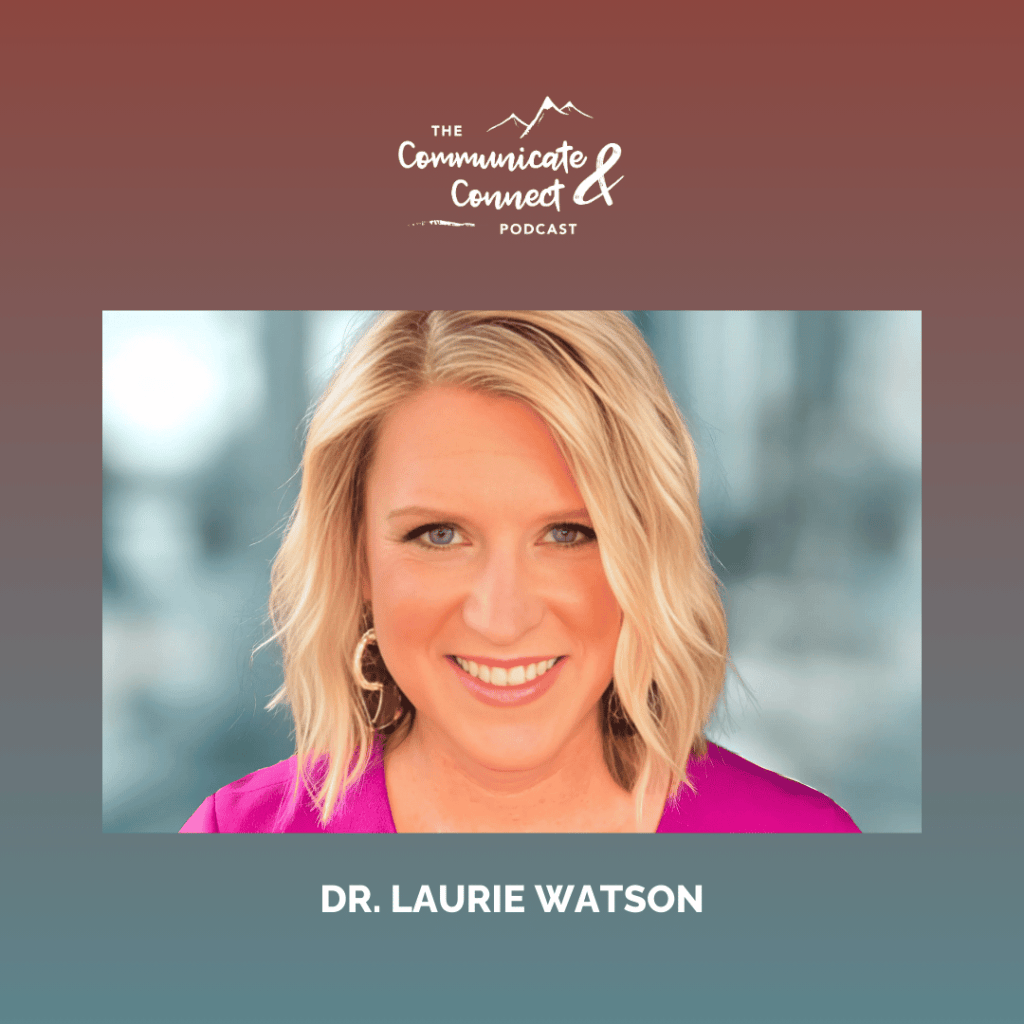
Dr. Laurie Watson is a renowned certified sex therapist and licensed marriage family therapist, celebrated for her dedication to improving intimate relationships. With years of experience, she has made a significant impact through her work, which includes hosting the highly successful podcast, Foreplay Radio Sex Therapy. The podcast has achieved a remarkable milestone of over 4 million downloads, a testament to the value and relevance of her insights to couples around the world.
Dr. Watson’s mission is centered on helping couples keep their relationships vibrant and fulfilling by fostering both eroticism and emotional connection in their sexual lives. Understanding that many couples struggle to have open discussions about sex, Dr. Watson provides practical advice and strategies designed to bridge this gap. Her engaging approach empowers couples to communicate more effectively about their desires and challenges, promoting healthier and more satisfying relationships.
In addition to her podcasting achievements, Dr. Watson’s expertise extends into various realms of therapy, offering personalized guidance to those she works with directly. Her empathetic and knowledgeable presence has made her a trusted figure in the field of sex therapy, continually striving to help couples navigate the complexities of intimacy and connection.
Through her podcast and therapeutic endeavors, Dr. Laurie Watson has established herself as a pivotal force in the realm of sex therapy, profoundly impacting the lives of countless couples seeking to enhance their intimate bonds.
You can check her website at Awakenings Counseling for Couples and Sexuality for more information.
Free Relationship Pattern Assessment
Many couples assume they have a communication problem when they’re actually stuck in a relationship pattern that keeps creating the same conflict.
Take the free Relationship Pattern Assessment to discover what pattern may be keeping you stuck and learn what to focus on next.
👉 https://pages.communicateandconnect.com/relationship-quiz
Episode Transcript for “Why sex is important in a marriage with Dr. Laurie Watson”
Dr. Elizabeth Polinsky [00:00:01]:
This podcast is sponsored by Communicate and Connect Counseling, where we have a team of therapists who provide individual couples and family therapy services, all tailored to meet the needs of military and veteran families. To learn more about our services, visit www.communicateandconnect.com.
Welcome to the Communicate and Connect podcast for Military Relationships with your host, Elizabeth Polinsky, a military marriage counselor. If this is your first time listening to the Communicate and Connect podcast, please take a second to go, rate, review and subscribe to make sure you get all our future episodes. We also really want to know what it is you love about our podcast.
And if for some reason you’re not loving it, we want to know that too, because we’re committed to providing the best quality content to help you improve your relationships.
This is episode 8 on why sex is important in a marriage. Hey everyone, this is Liz Polinski with the Communicate and Connect podcast and I am so excited.
Dr. Elizabeth Polinsky [00:01:22]:
Today I have Dr. Lori Watson, who’s a sex therapist, here to talk a lot about sexuality in marriages and in long term couple relationships and especially how do you deal with sex if you are in a long distance relationship or over deployment. So. But first, I’ll just give her a chance to introduce herself. Dr. Watson, do you want to. You want to take the. Take the mic?
Dr. Laurie Watson [00:01:46]:
Sure, sure. So I am a certified sex therapist and a licensed marriage family therapist. And I know, Liz, you’re in a program for that, which is exciting. I’m also a podcaster as well, and I am the host of Foreplay Radio Sex Therapy, which we’ve just reached 4 million downloads. I’m so excited. So whatever we’re doing, some people are listening out there and we really are focused on the podcast, on helping couples keep it hot.
People who are in committed relationships, we want them to feel the eroticism and the emotional connection in sex. And we’re trying to help them find a way to talk about it, which, you know, everybody’s doing it, but a lot of times people don’t have a way to talk about it.
Dr. Laurie Watson [00:02:33]:
So that’s what we’re doing, is we’re having a conversation. I’m with my co host, George Fowler, who’s the bomb. He’s a guru and couples therapist and we’re trying to model a male and female conversation that’s natural about sex.
Dr. Elizabeth Polinsky [00:02:49]:
Yeah. I have always heard that communication, sex and money were the top three problems in marriages. And so. Right. I don’t know if that’s true. It’s just what I’ve always heard. So I’m really glad that you’re going to talk about sex. But you also mentioned even just communicating about sex.
Dr. Elizabeth Polinsky [00:03:07]:
So I’m wondering now, like, what are some of the problems couples experience in terms of just starting a conversation like that?
Dr. Laurie Watson [00:03:16]:
I think you’re right that that is topically what people struggle with is communication, money and sexual. And kids, when they come along too. That’s a good one. But I really think there’s only one problem, and it is the difficulty that all of us have between balancing our autonomy with our needs for closeness. So we all need to be master of our own ship. We need to do our own thing, we need to be respected. We need support for our individuality in our own endeavors. But we also need love and connection and intimacy and sex and excitement in the bedroom.
Dr. Laurie Watson [00:03:55]:
And it turns out that once we marry or once we get connected and committed, one partner seems to corner the market on one of those aspects of the relationship, and the other corners the market on the other issue. So one person seems to want more closeness and connection. Talk to me, spend time with me. I miss you, I need you. The other person seems to be focused their purpose. And they feel a little suffocated when their partner says, you know, I need more from you. I need more talking, I need more time. Tell me your feelings.
Dr. Laurie Watson [00:04:29]:
That can feel really overwhelming to the person who is whom I call the withdrawer, the pursuing partner, the one who chases says, you know, the more I chase, the weird thing is my partner backs up and I feel really deprived in this relationship. And sometimes in heterosexual relationships, this flip flops over sex.
So the woman wants more talk connection emotionally. And the man maybe is more concerned about his space and his autonomy needs. But in the bedroom, he really feels love and need and connection through his body. And she’s not as interested in the bedroom. You know, it can be a double bind. Talk to me so that I want to have sex with you.
Resolve power struggles with vulnerability in relationships.
Dr. Laurie Watson [00:05:16]:
And he says, you know, have sex with me so that I feel safe enough and vulnerable enough to talk to you. And that’s classic and stereotypical, but frequently happens. And I think the problem in sex is this very problem. It’s actually the problem in every area of the relationship.
Once we resolve this, once we learn that it doesn’t have to be a power struggle that we can come to each other in vulnerability and talk about our needs, talk about our feelings, not from a blame position, but from a vulnerable position. You know, I long for you. And that could be I long for you emotionally or I long for you in my body. And I feel sad when I don’t seem to have enough of you.
Dr. Laurie Watson [00:06:02]:
That’s really different than, you know, you never give me sex, or you always want sex and you never want to talk to me. Those are blaming kinds of statements. They’re not from the heart. They’re not. Vulnerability and vulnerability and curiosity about our partner’s perspective heal everything in a marriage, including sexual problems.
Dr. Elizabeth Polinsky [00:06:23]:
Yeah, that makes a lot of sense to me. I’m thinking about some. Some couples. I just had a couple recently where they said, like, sex isn’t everything. It shouldn’t. It shouldn’t be all about sex. And I am also kind of curious, what role should sex play in a marriage?
Different sexual importance causes marital discrepancies.
Dr. Laurie Watson [00:06:43]:
So it’s potential that they feel differently about this. Very potentially, they feel differently about this. So the person who says, I don’t think it should mean everything might be the sexual withdrawer and the other partner who feels like, hey, it’s really, really important to me and what I think of when I think of marriage, so that would probably be the sexual pursuer.
And it’s true that many times we have placed different importance on the sexual relationship, but sex is part of the cycle of marriage. Just the way there’s a cycle in terms of emotional connection, there is a cycle in terms of sexual connection. If both of them feel like it’s not that important, first of all, they’re probably not going to show up in my office, right? Yeah, they’re content with how they are.
But I would say for many, many people, there’s a huge discrepancy between how important one person rates the sexual relationship and how important the other person does. And sometimes that’s governed by a body that is filled with testosterone or a body that is not filled with testosterone.
Dr. Laurie Watson [00:07:50]:
A body, usually a male body, that has copious amounts of testosterone. Their body chemistry, their physiology, forms their psychology. So their connection is felt from the body. That is a place that emotions and sexuality are stored. And when they’re with a body who is not pushed for sexual desire because they have low testosterone, and both men and women have testosterone, and that’s kind of the governing hormone inside each of us that pushes us for sexual desire.
If a high desire person, high testosterone person is with a low testosterone person, it can feel really different. But there are psychological needs. And I think most of us, when we stand up and marry, we are pledging fidelity.
Dr. Laurie Watson [00:08:49]:
And that, to me, is not just a pledge of keeping away from all others. It’s a pledge onto our partner to have an erotic life, to have a life that is also centered in the body. That it’s not just a mind connection or an emotional connection, but that we are going to live with somebody intimately in our bodies. I know my marital vows actually included with my body, iv worship. It’s an old vow from the Episcopal Church.
In partnership, we are both souls and creatures with emotions, and we are also physical beings. So I usually see the people who have a discrepancy in terms of how they think sexuality should be expressed. I identify as a sexual pursuer.
Dr. Laurie Watson [00:09:39]:
So, you know, I see sex as very, very important to me in terms of how I feel deep connection with my partner.
Dr. Elizabeth Polinsky [00:09:48]:
Yeah, that makes a lot of sense. And so the big problem is when people are mismatched in terms of sex drive.
Dr. Laurie Watson [00:09:56]:
I think that men and women are frequently mismatched in terms of biological drive.
Dr. Elizabeth Polinsky [00:10:02]:
Okay?
Dr. Laurie Watson [00:10:03]:
Women maintain sexual drive differently than the way men feel it. Most women have drive that is formed in their imagination, in their memories. And what I say, kind of cultivating an erotic core, which is they allow themselves sexual fantasy. They allow themselves to be subject to the stimulation that they get throughout the day and convert that stimulation into kind of a ready supply of desire for when the moment with their partner available. So, for instance, you know, they’re walking through the grocery line and they say, cosmo. They see Cosmo. You know, it’s his seven moan spots. Well, she may not.
Dr. Laurie Watson [00:10:50]:
She may roll her eyes at that magazine and say, oh, can’t they think of anything other than sex to print? Or she may be able to take that in and say, oh, yeah, yeah. I wonder if my husband has seven moan spots. Where is that? Or we hear a song that reminds us in high school, the first time we felt sexual feelings.
Or we see something hot on a movie, and it’s like, oh, yeah, yeah, yeah, yeah, that. I feel that a little bit. I’m gonna store that up in my mind to bring it out and be ready for when I can be sexual with my partner. Or we actively cultivate sexual feelings with a fantasy, and some people get really anxious. I live in the south, so fantasy is almost a dirty word here.
Dr. Laurie Watson [00:11:35]:
You know, it means something immoral. And I don’t think it does. I think it means an imagination of a future sexual event. And if you feel most comfortable imagining that with your partner, that’s great. But it can also. We can also convert the sexual look and attention from another. You know, we can be out at the grocery store and somebody looks us up and down, and that person is attractive, and we feel the energy, and it doesn’t offend us, but we can take that moment and kind of store it. And then when our partner is ready, like, some of that can be released.
Eroticism requires active development and communication.
Dr. Laurie Watson [00:12:13]:
It’s like, it reminds us all day long that we are a sexual being and a sexual creature. And I think for women, it’s really important to learn how to do this as well as to learn that. Actually, it turns out eroticism is something that needs to be developed. It is not something that happens naturally. So many of us, you know, we had great experiences in the early stages of our relationship where it seemed to be natural.
And nobody ever tells us that we need to actively develop this part, which means learning how to communicate really well and explicitly about our sexual desires, about how we like to be touched, about what turns us on, about the mood and the context that we need to feel sexual. Maybe it’s like, you know what? I can’t really feel sexual very easily When I got two screaming babies in the other room. Let’s go out.
Dr. Laurie Watson [00:13:11]:
Let’s rent a hotel room. I’ll go early, take a nap. I’ll take a shower, put on some makeup, dress up. I’ll meet you downstairs for appetizers and a glass of wine. Then let’s go upstairs, have wild sex. You go home, take care of the babies, let the babysitter go home. I’ll sleep in because I need so much sleep till noon. And then I’ll come home, and we’ll have a wild night.
Dr. Laurie Watson [00:13:40]:
And a lot of people, that’s context, that helps them. And knowing what helps you kind of what blocks you and what turns you on Is really important in developing an erotic core.
Dr. Elizabeth Polinsky [00:13:51]:
Yeah. So if I were to kind of summarize the way to maintain that eroticism in your relationship is like, one to know what turns you on and what turns you off and then to communicate it.
Dr. Laurie Watson [00:14:03]:
Absolutely. And I also think, you know, we need to show and tell, Especially as women. So many men don’t really understand what turns a woman on. All women mostly have orgasms through clitoral stimulation. And porn and movies and hearsay says that women get turned on by big penises and lots and lots of thrusting, which is not actually true. Only about 4% to maybe 20% of all women can even have an orgasm through sexual intercourse.
Dr. Elizabeth Polinsky [00:14:39]:
Yeah, that’s such a small number.
Dr. Laurie Watson [00:14:41]:
It’s such a small number. And, you know, men who don’t know that sometimes think, well, you know, I did everything I was supposed to do. I lasted a long time. You know, maybe she doesn’t like it. Maybe she’s frigid. I don’t know, maybe she doesn’t orgasm. They don’t realize that it’s actually clitoral stimulation. That is how a woman orgasms.
Dr. Laurie Watson [00:15:02]:
And she needs to tell him that. She needs to show him. I say women should show and tell. You know, they should let him look at her vulva and show him where all the sensitive places are and how she likes to be touched. And I know that’s really, really vulnerable.
Dr. Elizabeth Polinsky [00:15:20]:
Yeah, I was thinking even that would be scary. Scary to be that vulnerable.
Understanding women’s needs for mutual sexual satisfaction.
Dr. Laurie Watson [00:15:25]:
It is so scary, and it is so necessary. Because every man I’ve ever talked to who says, yes, I’m absolutely sure how to help my wife have an orgasm, he had that experience. She or maybe a former girlfriend told him explicitly showed him what she likes so that she could reach orgasm.
Because while women may not want to have an orgasm every single time, the majority of the time she needs to have an orgasm or she’s not going to want to do it. If there’s no big bang, there’s no big deal. And he’s going to be disappointed. And he may not know that she’s not having an orgasm. You know, maybe he’s not been with a partner who’s very expressive.
Dr. Laurie Watson [00:16:08]:
So women need to be able to communicate this directly. My co host says, George says that he doesn’t think men ever learn that the clitoris is analogous to the male penis. It’s actually the same structure as an embryo. It has a glans that’s a tiny pee area. It has a shaft, and it actually gets erect as she gets aroused. Frequently, men and women count on lubrication as the signal that she’s ready for sexual intercourse. But it’s actually vasocongestion, which feels like puffiness and looks like a little bit of swelling. That’s more when she’s ready for sexual intercourse.
Dr. Laurie Watson [00:16:50]:
And I say women are ready when they say they’re ready and not before. But her arousal is determined more when her body engorges with blood. Just the way a man’s penis gets erected. A woman’s vulva fills with blood and sort of becomes erect as well. And the clitoris can become erect. And that’s a more reliable sign about where she is in terms of her arousal than lubrication.
Dr. Elizabeth Polinsky [00:17:19]:
Yeah, that is really fascinating to hear you say that. I am thinking about how I’ve heard some women in the couples that I meet with, they’ll talk about, like, feeling like they have to be ready whenever the guy is ready. And recently I’ve been hearing a lot about faking orgasms. Because they don’t want to offend their partner. Some of them told me that they never had an orgasm with a certain partner. And so part of that is from kind of the lack of sharing that information and what would work for them, right?
Dr. Laurie Watson [00:17:56]:
Most of it is from lack of sharing. Most men do want their partners to orgasm. And the reality is we have different bodies. I mean, men are microwaves, right? I mean, they can be aroused with an erection and ready to have an orgasm within minutes. Women, it takes us. I call it the 2020 solution. It takes us about 20 minutes of slow, gentle caressing that is not focused on the breasts and genitals just to kind of switch mindsets to come into the body. We have very busy minds.
Understanding differing arousal times can ease frustration.
Dr. Laurie Watson [00:18:27]:
There’s many things on our list, so we need to transition right into the bed. And we do that with starting to lay naked together, to touch, to kiss, to become aroused. And then it takes women about another 20 minutes of direct, contiguous clitoral stimulation to reach orgasm. So that’s a long time, and that’s really different than the few minutes it takes our male partners to reach orgasm.
And that can be frustrating for both men and women. Much of the frustration is about a misunderstanding that this is normal. She looks at him and says, oh, I’m really slow. And I’m like, well, how long does it take you? Oh, you know, 10 minutes.
Dr. Laurie Watson [00:19:11]:
I’m like, I’m gonna give you your money back, girl. You’re so fast. Yeah, that is. That is a fast woman that can, you know, climax in 10 minutes. Or maybe they drop into this pattern right? Of he’s ready, so we have sexual intercourse and sex is over when he’s done, which is a terrible pattern because she needs more than that. Vibrators are very helpful in eliminating some of the time that it takes. I mean, she can use it beforehand and get herself aroused so that every touch feels exquisite, or they can use it together. And most women like clitoral vibrators, not vaginal vibrators, because most women don’t climax vaginally.
Vibrators supplement, not replace, genuine relationships.
Dr. Laurie Watson [00:19:52]:
And men get kind of anxious occasionally about the use of a vibrator, fearing that they’re going to be replaced. And that would be very scary too, like, oh, maybe she’ll want that instead of me. But I gotta say, I have never talked to a woman who prefers a vibrator to a real live body who is caressing her and whom she’s in love with.
And I mean, that warm skin and that feeling and sensation of connection is so deeply grounded in our souls. I just don’t think it’s much of a threat, but I do think vibrators can be wonderful aids for a weeknight quickie. Right. When, you know, you just put the kids to bed and you don’t have 45 minutes to have sex. You only got about 15 minutes before you conk out.
Dr. Laurie Watson [00:20:39]:
It’s like, great. Use the vibrator. You know, use it while you’re having intercourse, while you’re on top, and see if you can focus attention on your clitoris at the same time you’re having intercourse or from behind. You know, those. It’s a wonderful resource that we have available, you know, in our modern era to help kind of reduce some of the time. But I also think women need that long lovemaking because there’s nothing more pleasurable than being slowly aroused and reaching orgasm. That’s a wonderful experience, and men need to know how to do it. And the only way.
Dr. Laurie Watson [00:21:15]:
The only way they’re going to know how to do it is by her showing and telling.
Dr. Elizabeth Polinsky [00:21:21]:
Yeah. Wow, this is. I’m really enjoying this conversation. I feel like I’m learning so much, which is part of the reason why I listen to your podcast, because I learn so much every single time I listen to it.
Dr. Laurie Watson [00:21:32]:
Thank you so much.
Dr. Elizabeth Polinsky [00:21:34]:
Yeah, so I do have some questions for you about, because, you know, this is a little bit more geared towards military couples who are often long distance. My partner and I were long distance for a year and a half, and.
Dr. Laurie Watson [00:21:49]:
God bless you both. Right. Not only are the partners serving our country, but their spouses are also serving our country by holding down the home fort and supporting their partners. I mean, both people, I believe, are in service. So thank you.
Dr. Elizabeth Polinsky [00:22:05]:
Oh, thank. Yes. Thank you for that. Yeah. And it’s. It’s hard. It’s hard on a lot of levels. Once we were no longer long distance and we were living together in the same place again.
Dr. Elizabeth Polinsky [00:22:17]:
You know, my partner was just gone for two weeks, and I was thinking, oh, my gosh, this is just two weeks. I know I made it such a longer time, but it was still hard in a lot of. A lot of ways. But I think sex is one of those ones that really stands out when it’s such a lengthy time to go without being able to have sex with your partner. So I guess I was curious if you had thoughts about how to keep things erotic if you’re long distance or if they’re deployed.
Dr. Laurie Watson [00:22:47]:
Thank you, Liz. I think what you’re talking about is such an important subject and is shared by so many couples, this difficulty in maintaining connection when you’re long distance and deployment could last even up to a year, right?
Dr. Elizabeth Polinsky [00:23:04]:
Yeah. And I’ve had some couples because I mostly work with military couples, some that were joint military, where one was on like a 15 month deployment, they came home to the other one deploying, and I’m just like, how do you deal with that?
Dr. Laurie Watson [00:23:21]:
You can’t see me, but I’m shaking my head because it’s such a huge difficulty. So there has to be a great deal of intention about maintaining connection, both emotionally and sexually when they’re gone. And then we have to deal with the secondary problem of deployment where the person might experience action and be traumatized.
And they say, you know, about 70% of soldiers have PTSD, have been traumatized. And the military is not a place that that gets talked about. It gets talked about in my office because if you have ptsd, likely you will be changed and traumatized sexually. Because sex requires the ability to let down our guard and let down our vigilance and be merged with somebody. But PTSD and the military in general, right, the training, your training in your body, they dig it in so heavily into your very body that it’s about being vigilant.
Returning soldiers struggle with intimacy post-deployment.
Dr. Laurie Watson [00:24:28]:
It’s always about being on watch. And that’s the antithesis of the sexual experience where we’re supposed to let everything go and merge. And so it’s very difficult, whether you have had PTSD or not, I think, to come home from a deployment and then feel like, okay, you know, their partner may be waiting, great, there’s going to be this great sexual reunion.
And the soldier is like, I don’t want anything to do with it. Not because they don’t experience desire still or don’t love and desire their partner, but it’s this difficulty. How do I let go? How do I let my guard down when I’ve been taught and all my training says that that’s going to be dangerous for me. And sometimes I think with ptsd, there’s this sense of I’ve seen such awful things that it almost lodges in the body, and I don’t want to be merged with another body whom I love. And somehow or another, I’m afraid I’m going to contaminate them with the awful things that I’ve seen or done.
Dr. Laurie Watson [00:25:30]:
You know, I mean, it is a real difficulty. So stepping back one second, maintaining connection at a distance, you know, you have to have some sort of agreement about regularity, whether it’s by email or a phone call every week if you possibly can, you know, and some of it may be texting and sexting and talking dirty and talking about your longing in your body.
And that can be really difficult, I think, especially for women when we’re socialized not to let out of our mouths our intimate feelings and thoughts about sex. You know, our partner may say, hey, talk dirty to me. And it’s like, ah, I suddenly feel frozen. I suddenly can’t think of a thing to say. And so some of it is this development of the erotic core. How can I learn to express myself in explicit detail when my partner is starving to hear that and not.
Women also pursue and need to feel desired
Dr. Laurie Watson [00:26:30]:
It’s not just men that are sexual pursuers. I mean, women, too, can be sexual pursuers, and they long and hunger to feel the desire of their partner. You know, maybe it’s just telling her, you know, I look at your picture on my phone, and all I can think about is how beautiful you are and how lovely the curves on your body are.
And, you know, this part, particularly your breasts just turn me on. Or, you know, I look at your backside, girl, and, you know, I just, you know, I can’t wait to get home. I mean, I think women particularly need to feel desired. Sex researcher Meredith Chivers says that being desired for women is the orgasm. Like, that’s a.
Dr. Laurie Watson [00:27:14]:
That’s a real pinnacle experience for her sexually, and she needs that to stay turned on. So continuing to hear about the desire of her partner can be very reassuring. And I think men often need explicit talk about how she desires him, too.
We think about men as, you know, they supply all the desire in a relationship, but it’s very human to want to be desired. And I think when you’re deployed for a long time, you know, that is so painful because you really don’t have an outlet sexually. So hearing that from your partner can be, like, the best news ever. Okay, I’ve got somebody I’m coming home to. I’ve got somebody I’m fighting for.
Dr. Laurie Watson [00:27:58]:
They want me in the way that I feel. Love the keenest.
Dr. Elizabeth Polinsky [00:28:03]:
Yeah. So maintaining, like flirting by flirting over email or text message, that helps keep the eroticism there. And so that way, when you come home, it’s not like it’s been depleted or you’ve gone without the whole time, even if you went without actual sex.
Dr. Laurie Watson [00:28:23]:
And I would say in the flirting, lean toward the spicy side of it.
Dr. Elizabeth Polinsky [00:28:27]:
Okay. The really spicy side. Okay. Yeah.
Dr. Laurie Watson [00:28:33]:
If you want, you know, to bless your partner, that’s a way to do it.
Dr. Elizabeth Polinsky [00:28:38]:
Well, this has been really helpful, I think, for me, both. Me personally being a military spouse and thinking about how Am I going to handle it again when my partner is gone on a deployment? At least when we were long distance, it was easier to get ahold of him. Like, I could email or I could call him whenever I wanted to. I could text him, we could video chat whenever I wanted to. Even during the two weeks he was gone, it was like I couldn’t know when he would be able to contact me again.
Dr. Laurie Watson [00:29:12]:
That could create so much insecurity, doesn’t it just so much insecurity, this sense of unreliability. I can’t reach you when I may need you. And all of us feel security when we can reach for our partner and we know they’re there. And unfortunately in the military, you are physically blocked from being able to have that sense of security. If I reach for you, you’re there. It’s like, no, I reach for you, I need you. And I really. I may not be able to talk to you for a week or until you come out of the mission.
Dr. Elizabeth Polinsky [00:29:46]:
Yeah, absolutely. Thank you, Dr. Watson, for being on this podcast. Do you have any last thoughts or takeaways for people who may be listening?
Dr. Laurie Watson [00:29:57]:
I am just saying, you know, you have my heart. God bless you both, your deployed partner and the spouse at home. Please listen to me on Foreplay radio as well if you want your partner to understand more about female orgasm. We’ve done a lot of episodes on that. George Fowler was a first responder in 9 11, so he talks about his story and PTSD and how to manage that both emotionally and sexually in a relationship. So he’s really a resource for first responders and the military. He works with the military as well. So we would love to have you join us there.
Dr. Laurie Watson [00:30:38]:
And I am just sending good thoughts your way, all of you. And thank you, Liz for inviting me and I wish you so much luck on this podcast.
Dr. Elizabeth Polinsky [00:30:48]:
Thank you.
Dr. Laurie Watson [00:30:48]:
I think it’ll be important for military spouses to stay connected and to share the pain of what they’re going through. That I think will be a fantastic resource for them. So I wish you a lot of luck.
Dr. Elizabeth Polinsky [00:31:01]:
Thank you. Yeah, I’m hoping it’ll be that way. Yeah. So thank you so much.
I hope you enjoyed today’s episode. If so, please take a second to go, rate, review and subscribe so you get all of our future episodes. Make sure to check out the show notes to sign up for our free 10 week relationship email course. This email course is really designed for people who are maybe having trouble with communication or connection in their relationship and helping them develop some quick wins.
Dr. Elizabeth Polinsky [00:31:44]:
Right away to start improving it. While I am a therapist, this podcast is for educational purposes only and is not considered therapy and it should also not be a replacement for therapy. If you think you need a professional of any kind, you should definitely go find one. Until next time.


